
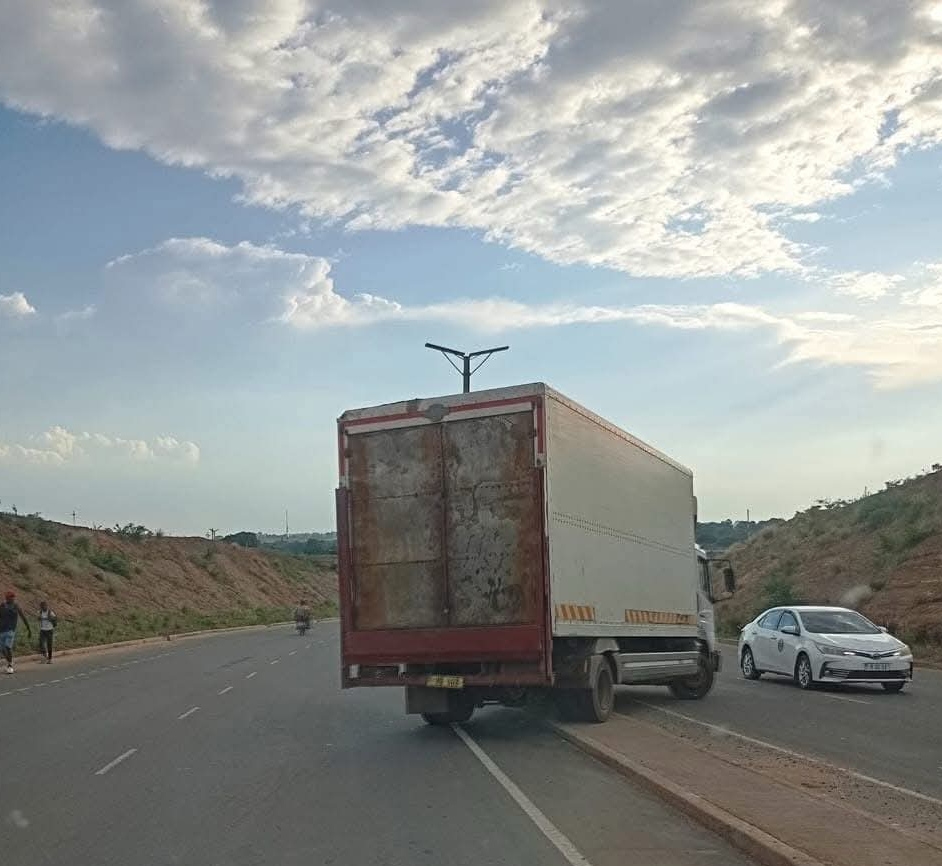
If you are on social media, you may have seen photos like the one above, of one driver or another breaching the central divider of some dual carriageway in Malawi.
It’s an annoying and uncivilised behaviour which the road authorities in Malawi need to urgently address, if not for safety of motorists, then for the sake of those of us who are constantly being inconvenienced by it.
And one solution involves erecting strong central metal barriers like the ones below:
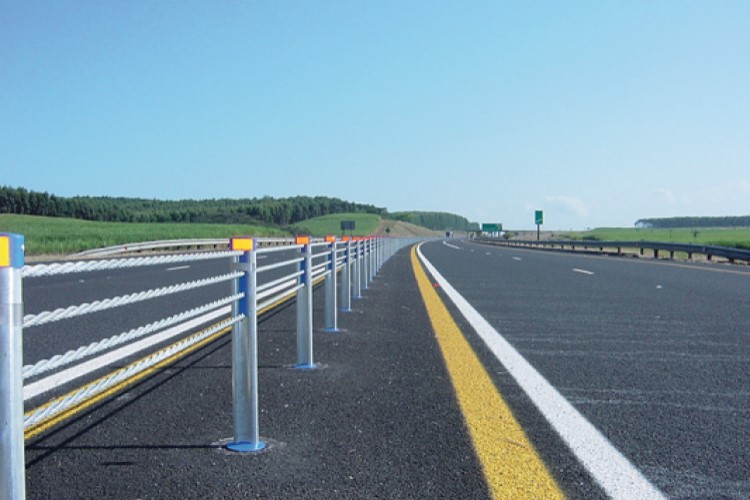
There are many types of barriers, and in some developed countries they are used mainly to ensure road safety in the event of an accident. In our case, we need them because of these idiots who behave as if msewuwo ndi wa ambuya awo.
Now, I know that someone is going to complain about the cost of erecting these things. But, if you drive on the roads of Malawi, you’ll agree that it’s a necessary public expenditure because it will solve the above problem.
And if anyone then damages the barriers by driving into them intentionally, with the intention of turning where it’s not allowed to turn, the full force of the law should be unleashed on them. Let’s send such an idiot straight to jail and confiscate their vehicle to auction it off on behalf of the state.
Having settled that matter, let’s now think about how we should build our roads in Malawi.
A Brief History of Motorway Road Barriers

The design of motorway central barriers has evolved significantly over the last few decades, driven largely by a relentless pursuit of improved road safety by Road Authorities in several western countries. Early motorways relied on wide, unfenced central reservations to separate opposing traffic. But as traffic volumes increased, low-level concrete or steel barriers were introduced to prevent smaller vehicles from crossing.
The Rise of Concrete Barriers
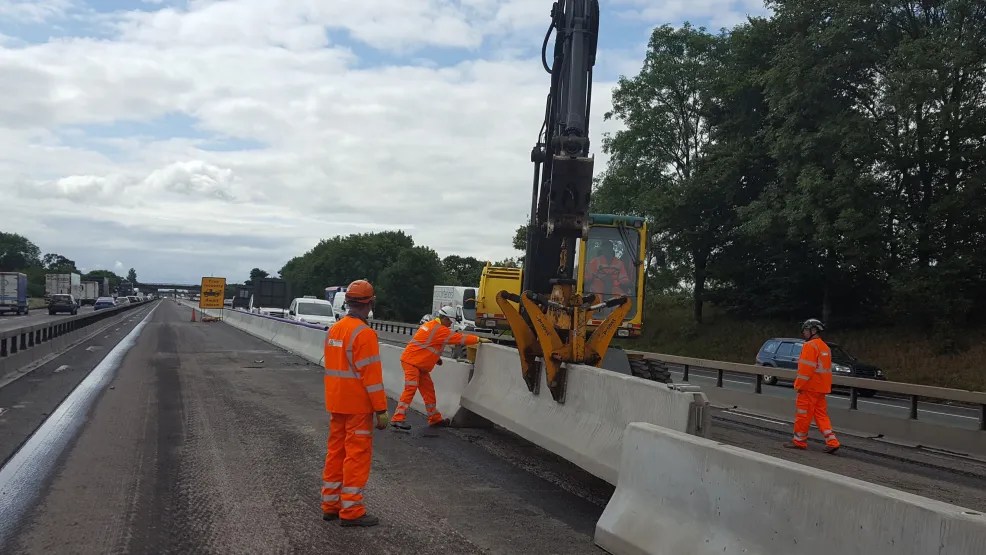
In the 1970s and 1980s, there was a movement towards increased height and strength with development of higher barriers capable of preventing larger vehicles from breaching the barriers 🚧.
But the cost of materials spurred a new search for cheaper but stronger materials, and in came concrete. Concrete barriers became the standard choice for their durability and effectiveness. Soon, ‘Concrete Step Barriers’ were invented. These emerged in the 1990s and were designed to absorb impact energy and redirect vehicles.
These days, the focus appears to be shifting towards Innovation
- Steel Barriers: With the price of Steel being relatively low, steel barriers, while less common, became popular, particularly for their noise reduction properties.
- Composite Materials: The exploration of composite materials has offered the potential for lighter, stronger, and more adaptable barriers.
- Smart Barriers: The integration of sensors and warning systems into barriers is providing advanced safety features in some countries. Similarly, the central barriers have in the past been used to carry signalling and other types of cables.
Finally, let me end with one final related point.
Modern road construction should consider not just barrier erection but safety of all road users, including vulnerable road users. Pedestrians and Cyclists, as well as elderly pedestrians for example, should be thought of as far as creating roads that cater for their safety. At the moment, not enough of this is being done.
https://twitter.com/Binya_911/status/1628720762193321990?t=Wh1mvJ7CbJJOoRmNN_pWEA&s=19
Nde pa Malawi we also have roadside traders. So, are we thinking about the livelihoods of these people, and their families when we build our roads? Or are we just thinking about those rich and well-to-do folks who can afford a car?
There’s another persuasive argument on this matter. Roads should not be built just for motor vehicles, especially considering Malawi’s fledgling economy, whereby every few years we have faced a fuel ⛽ crisis. Going forward, we have to start seriously thinking about sustainability in road construction.
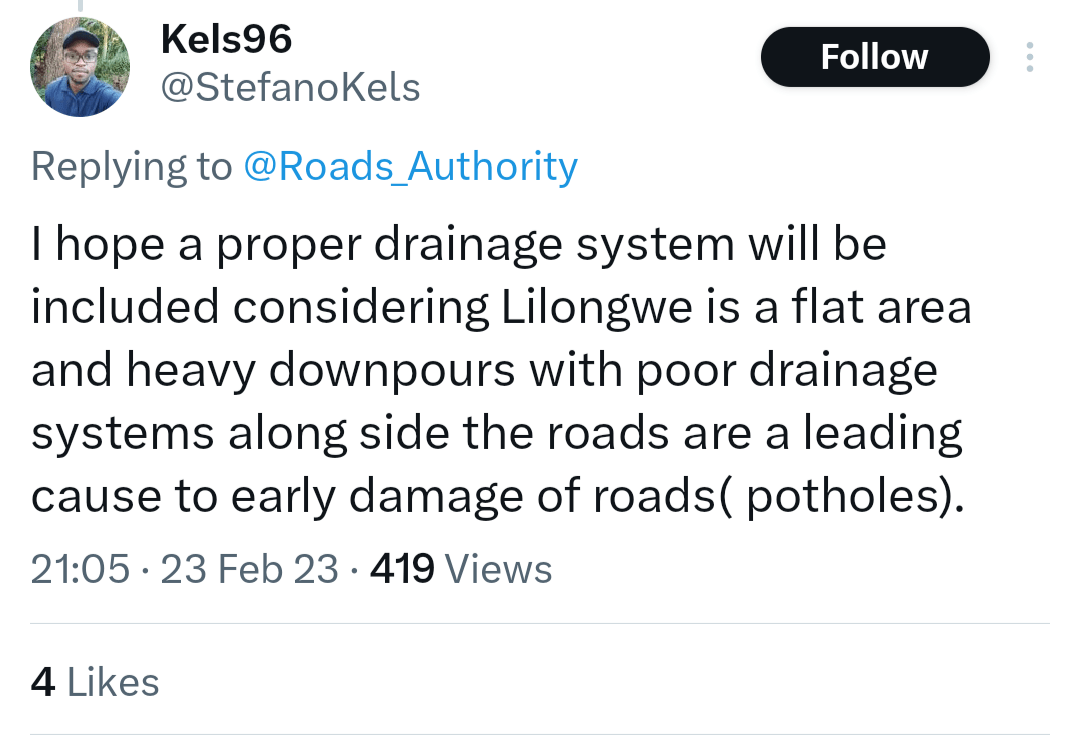
So, maybe our future roads must evolve to accommodate not just changing traffic patterns and vehicle types (e.g. electric cars & the charging infrastructure they will require), but to also ensure we’re thinking about all the other road users(Motorcycles, Bicycles, Electric Scooters…etc.) and other overlooked aspects like drainage and lighting.
 malawiace.com