
Great ideas have certain traits about them. Those who can identify those signatures will one day in the future reap huge rewards.
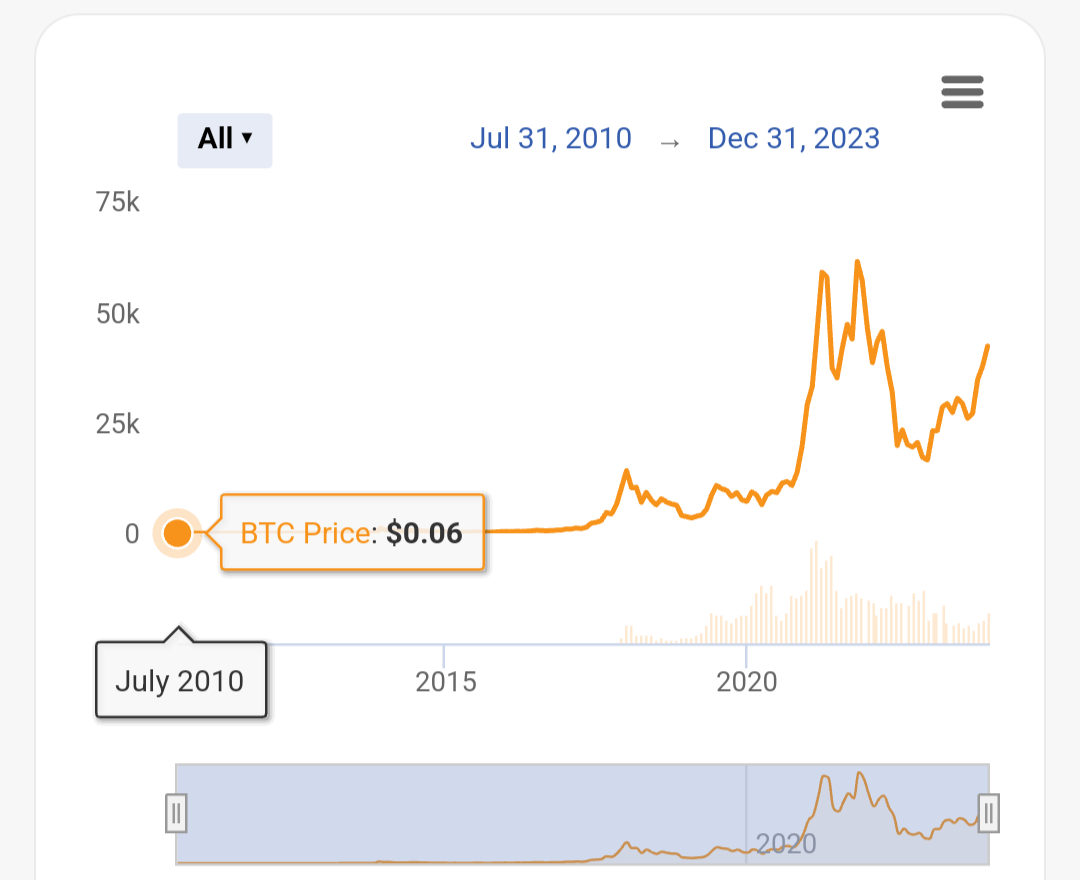
In July 2010, Bitcoin’s introduction saw it being traded at just US$0.06. By February 2011, less than a year on, it had reached its first major milestone: parity with the US dollar. Eight years later, in July 2018, Bitcoin was trading at over US$7,000.

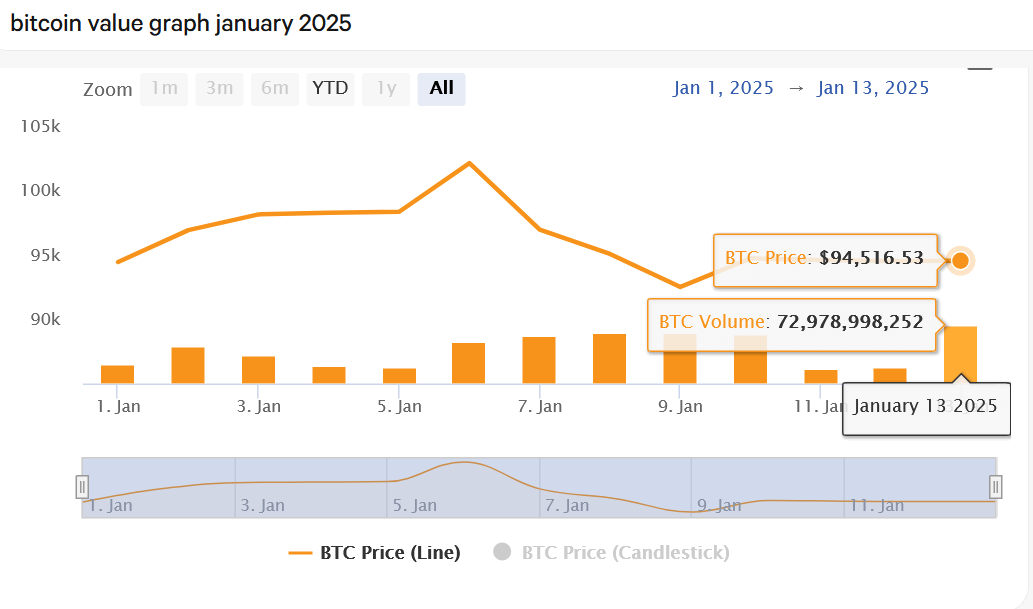
And fast forward to yesterday, January 13th, 2025, and Bitcoin now trades at over US$94,000 per coin.
There are many reasons behind this astronomical rise, and while the ‘dream’ among the most ardent of crypto fans that bitcoin would become a viable substitute for government-issued money is yet to be realised, minimally the growth represents one of the most significant wealth creation opportunities in modern history. More importantly, it offers valuable lessons on pattern recognition for transformative technologies.
The key insights isn’t about Bitcoin itself, it’s volatility, the exchange collapses and bad news, or what detractors call its cult status, but rather about the patterns of how transformative technologies emerge and evolve.
Initially, Bitcoin was dismissed by many “experts” as a fringe experiment, a fad, a Ponzi scheme, but nevertheless it was understood by a few. And valued by even fewer.
And the people who saw its potential early on weren’t just lucky – they understood something fundamental about how certain technologies are born, how they take root, and how they grow. Some of them had studied similarities with the finance markets, and understood the lifecycle of such technologies, persisting in advocating for it despite all the opposition from the so called “experts”.
Then, there were also those who missed out…but that’s a story for another day.
In this article, I’ll discuss not whether bitcoin is a good investment vehicle or whether I back buying it, or any other crypto. No, instead I’ll look at three noticeable patterns from Bitcoin’s rise, and why I think they are relevant today. At a time that is considered by some people to be the infant years of consumer Artificial Intelligence applications. These observations matter because, like many others have suggested, what we are seeing now with the rise of Large Language Models (LLMs) and AI Chatbots is in fact the dawn of AI applications. Today happens to be the July 2010 for AI.
1. The “Unserious” Effect
(joyoftech.com)
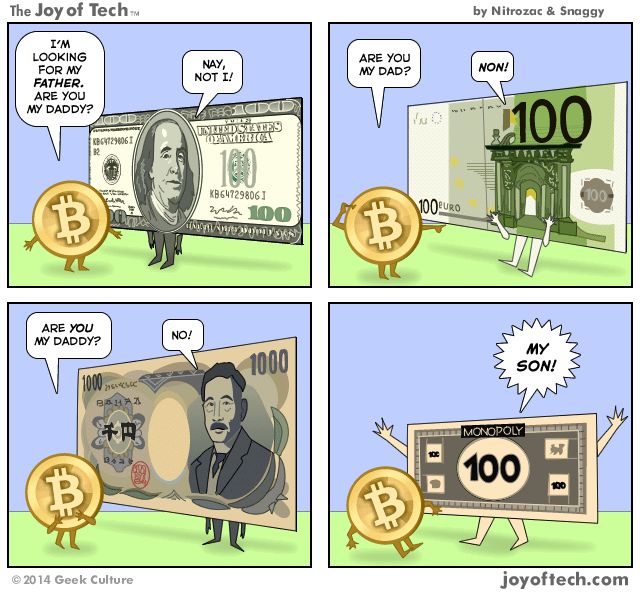
Firstly, truly transformative technologies often appear “unserious”, petty or nonsensical at first glance. In 2010, the idea of a crypto currency seemed absurd to most financial experts. Nobody who was somebody took it seriously. Take a look at these articles for example, which include opinions of people who once thought Bitcoin will never be widely adopted:

- Digital currency gains virtual interest (China.org).
- Tech People Are Passing Around This Paul Krugman Quote On The Internet After He Called Bitcoin ‘Evil’ (Business Insider)
- Financial Advisors: It’s Time to Study Bitcoin (Swan Bitcoin)
- Governments and banks once mocked Bitcoin. Now they want in on it (Al Jazeera )
- I Was Wrong About Bitcoin. Here’s Why ( New York Times)
- Trump, who once trashed bitcoin as ‘based on thin air,’ addresses crypto’s largest convention (CNN)
(Image © China Daily)
Similarly, today’s AI applications are being dismissed by some as mere parlor tricks and fads that will wither away. And some experts are saying similar things as those Financial “experts” said in the early 2010s regarding Bitcoin.
2. Narrow ‘Window of Opportunity’
Secondly, the window of opportunity for great ideas is often shorter than it appears. While Bitcoin’s rise from 2010 to 2025 seems like a long time, the best period of adoption (and therefore the highest potential value increment) was concentrated in the earlier years. Thus, looking at the graphs and articles above, by the time mainstream financial institutions began considering Bitcoin, much of the exponential growth had already occurred. In other words, the best time to buy bitcoin was probably between 2010 and 2014. This means, if we look at Artificial Intelligence opportunities that are being presented today, the best time to get into them is probably now.
The Biggest Opportunities For Businesses Utilising AI
Via Forbes on YouTube.
3. A “Trainload” of scholars

Thirdly, and this is my final point: lots of people stopping whatever it is they were doing and spending lots of time understanding a new tech often precedes mass adoption.
It’s always been like that, even before the industrial revolution.
The early Bitcoin adopters who benefited most weren’t just gamblers or risk takers. Instead, they were people who took the time to understand the underlying technology and its potential impact on the future of finance.
Now, we can debate back and forth about the extent that such knowledge has helped the world of finance, but one thing is undeniable. A lot of people around 2009, 2010 and the early years, took time to learn what Bitcoin was all about and how it worked. The risk takers among these invested in the technology, while those who were technically competent (or were willing to learn) then subsequently began building applications and systems that utilised blockchain.
A similar shift is happening right now, as thousands of people are investing resources into learning about AI and AI applications. Some of them will create the technologies of the future. Many more still will be early adopters and investors and will reap significant rewards.
Now, of course bitcoin has had a troubled history, with many pitfalls, scams and misadventure along the way, which you’d think would have sunk the cryptocurrency by now. But the journey to growth and development is rarely smooth or straightforward for most modern technologies.
Today, AI presents a similar opportunity. Like Bitcoin in 2010, we’re at the beginning of an AI revolution that could fundamentally reshape society. The technology is still young enough that many are dismissing its potential impact, yet it’s starting to grow and demonstrate real-world value, as has been seen by the adoption of AI tools like ChatGPT, Claude, Gemini, and other tools.
African countries, in particular, ought to embrace and invest in AI, as a matter of urgency, as it could go some way in re-balancing the age-old inequalities that have existed in global finance and technology between the global south and the global north.

From where I stand, the parallels are striking: AI, like the early days of Bitcoin, faces skepticism from traditionalists, and requires technical understanding to fully grasp its potential. But it is beginning to show early signs of exponential impact. However, the key difference is that AI’s potential applications span virtually every industry, potentially making its impact even more significant than that of cryptocurrency. Further, unlike most cryptocurrencies whose inherent value is somewhat debatable, many AI systems are being built around businesses and technologies that have current real-world application. And which people currently use.
The lesson from Bitcoin isn’t about trying to find the next Bitcoin, but rather about learning to recognise and act on high value opportunities when they present themselves. And doing so as early as possible. It’s having the sensitivity and ears to hear of unique ideas early on, before most of the world has heard about them.
AI represents such an opportunity – not necessarily for speculative investment (as some critics say bitcoin has been), but for positioning oneself at the forefront of a technology that will likely define the next several decades of human progress.
The question isn’t whether AI will transform our world – it’s already beginning to do so. The real question is whether we’ll learn from history and technology shifts of the past, to position ourselves to participate in and benefit from this transformation, rather than watching from the sidelines as others not only shape the future, but subsequently reap the rewards.
 malawiace.com