
How will Trump’s Foreign Aid Freeze affect African countries and their citizens?
On 20th January 2025, Donald Trump signed an Executive order freezing U.S. foreign aid for 90 days, including United States Agency for International Development (USAID) programs, triggering widespread international concern and panic among NGOs who stood to be affected. This policy shift particularly threatens African countries, where U.S. support has been crucial for healthcare systems, food security initiatives, and economic development programs for many years. The suspension risks undoing decades of progress and creating widespread regional instability, since US aid accounts for 42% of global aid. Below are some of the areas that the freeze will affect.
- Healthcare Systems Under Threat: The President’s Emergency Plan for AIDS Relief (PEPFAR), established in 2003 with bipartisan support, has been fundamental to Africa’s HIV/AIDS response. Currently providing life-sustaining antiretroviral therapy to over 12 million individuals across sub-Saharan Africa, PEPFAR also maintains critical prevention programs and maternal health services. The aid suspension threatens to disrupt pharmaceutical supply chains, testing infrastructure, and community health networks. Nigeria, South Africa, Kenya, Tanzania and Uganda—representing nearly 50% of PEPFAR beneficiaries—face potential spikes in HIV-related mortality rates for the first time in two decades. Medical experts and health Authorities fear that in the absence of alternative sources of funding, this could severely impact programs preventing mother-to-child transmission, endangering an entire generation.
- Food Security Crisis: USAID’s agricultural assistance and emergency food programs have been vital in combating hunger in regions affected by drought, conflict, and climate emergencies. The Horn of Africa, where 23 million people were directly affected by acute food shortages in 2024, depends on U.S.-funded programs for agricultural supplies, irrigation infrastructure, and direct financial assistance to farmers. Similar programs in the Sahel region support essential malnutrition treatment facilities and school nutrition initiatives. The aid freeze could trigger severe famine conditions, potentially causing mass displacement and exacerbating existing migration crises. To draw parallels, recent aid reductions in Ukraine and Thailand have already demonstrated the devastating impact on grain distribution and agricultural development—a concerning precedent for Africa’s already vulnerable food systems.
- Economic Development and disruption to Education programs: USAID’s development initiatives extend beyond immediate humanitarian aid to foster sustainable growth. The Women’s Global Development and Prosperity Initiative (W-GDP) has been instrumental in supporting female entrepreneurs across Ghana, Rwanda, and Zambia through microfinance and vocational training. Educational programs, including girls’ scholarships and digital literacy initiatives, face potential termination. According to iNews, the aid suspension could force the closure of numerous community schools and vocational training centers, severely limiting economic mobility. With Africa’s youth-dominated demographics—60% of which are under 25 years old—this disruption to education can exacerbate unemployment and social instability.
- Strategic Power Dynamics: The aid freeze creates opportunities for rival powers, particularly China and Russia, to expand their influence across Africa. China’s Belt and Road Initiative already finances major infrastructure projects in 40 African nations, including ports, railways, and telecommunications networks. While these investments often carry significant conditions, financially constrained governments may have no alternative if Western support disappears than to be ever more dependent on the East. Already security experts are warning that reduced U.S. engagement could weaken crucial counter-terrorism partnerships in the Sahel region and Somalia, where terrorist organizations like Al-Shabaab maintain active operations.
- Impact on U.S. Interests: Despite being presented as a fiscal conservation measure, MSNBC reported that the aid freeze could have adverse effects on U.S. interests. Global health security remains interconnected—pathogens like Ebola and drug-resistant tuberculosis transcend national borders, and are best dealt with collaboratively. Regional instability often leads to increased extremism and migration pressures, directly affecting U.S. security and commercial interests. Additionally, American businesses benefit from African markets developed through USAID entrepreneurship initiatives. The short-term financial savings may result in significant long-term costs.
The Trump administration’s aid freeze represents more than just a budgetary decision—it constitutes a fundamental ideological shift in U.S. foreign policy with far-reaching implications, and not just for Africa. For example a Federal Judge on Friday temporarily blocked another freeze on Federal Grants and Loans, whose effects are being felt across the US. And there will be similar impacts in Latin America and Asia.
And while the new Secretary of State Marco Rubio announced that there will be limited exemptions and “waivers”, for African countries, the withdrawal of USAID support threatens to deepen economic hardship, and destabilise entire regions that are already vulnerable. Looking at Sub-Saharan Africa alone, the U.S. contributed more than $6.5 billion in humanitarian assistance last year. So what will the effect of that funding gap be?
Some African analysts and commentators think the aid freeze is a good and necessary measure, which Africa needs, for African NGOs and governments to wean themselves off US assistance. However, the “price” that must be paid, for that transformation to take place (or whether it will go as smoothly as some advocates of this line of thought assume) remains to be seen.
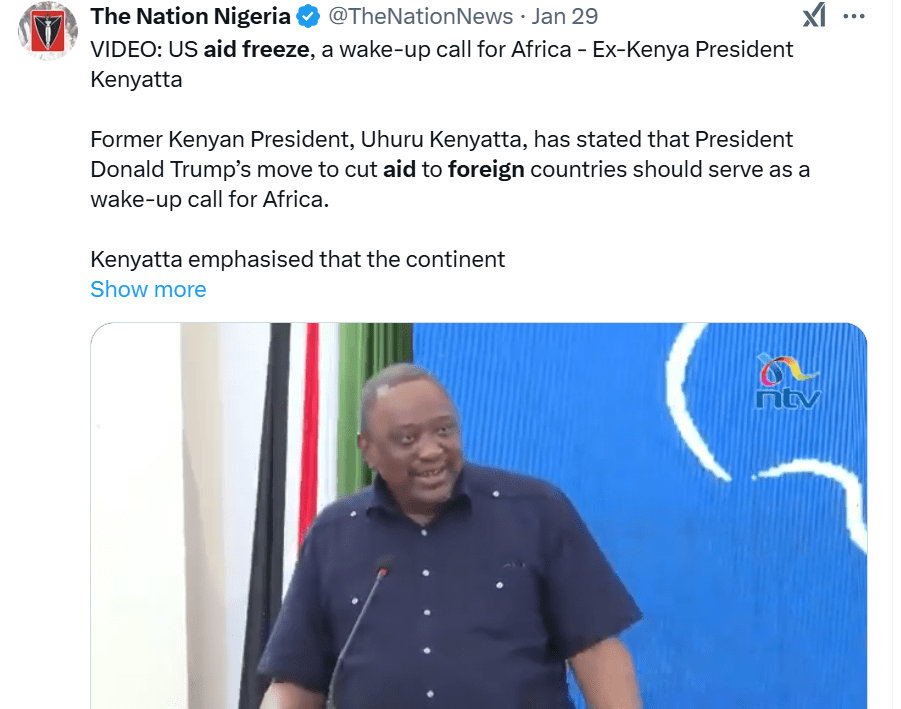
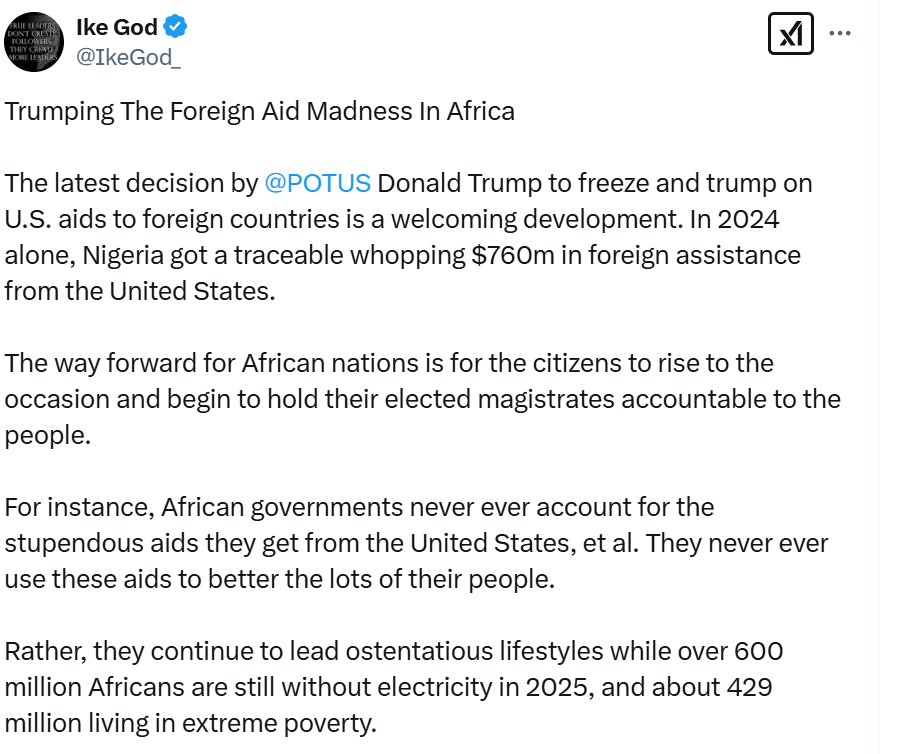
For the United States, it risks diminishing diplomatic influence, strengthening geopolitical rivals, and compromising global health and security. As bipartisan opposition mounts in the US Congress and in the Senate, and as NGOs advocate for policy reversal, the international community awaits to see America’s next move in this unprecedented moment for global development and stability.
- By cutting off assistance to foreigners, America hurts itself (The Economist)
 malawiace.com