
Listen to this article on Whyp (external) https://whyp.it/tracks/254475/trumps-imperialist-rhetoric
Trump’s Foreign Policy Shifts Raise Global Security Concerns
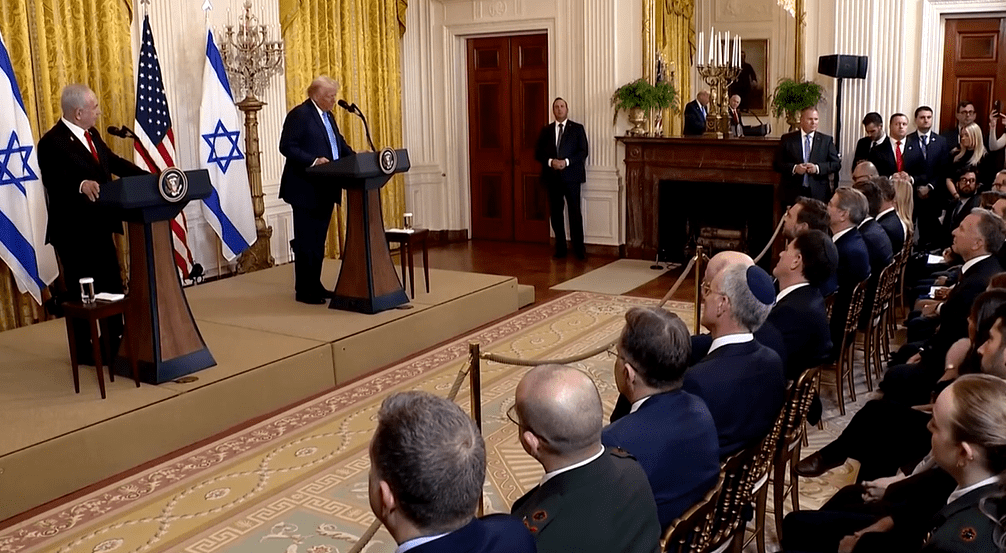
In a news conference with Israeli Prime Minister Benjamin Netanyahu yesterday, February 4th, 2025, Donald Trump proposed a controversial plan for the Gaza Strip, in which he suggested in an extraordinary statement that the United States should “take over the Gaza Strip” , and the US should “Own It, and level the site” clearing it, to create an economic development that creates jobs and develop it into a site where “world people” would live in “peace and harmony.” This proposal not only contradicts international law, which recognises Gaza as part of the Palestinian territories, but also challenges the foundational principles of human dignity and fairness by suggesting the forced displacement of an indigenous population.
Such a move would be illegal and especially problematic because it would directly destabilise peace efforts in the Middle East, which it must be said haven’t been going as well as many people would have hoped.
A Brief History of Imperialism
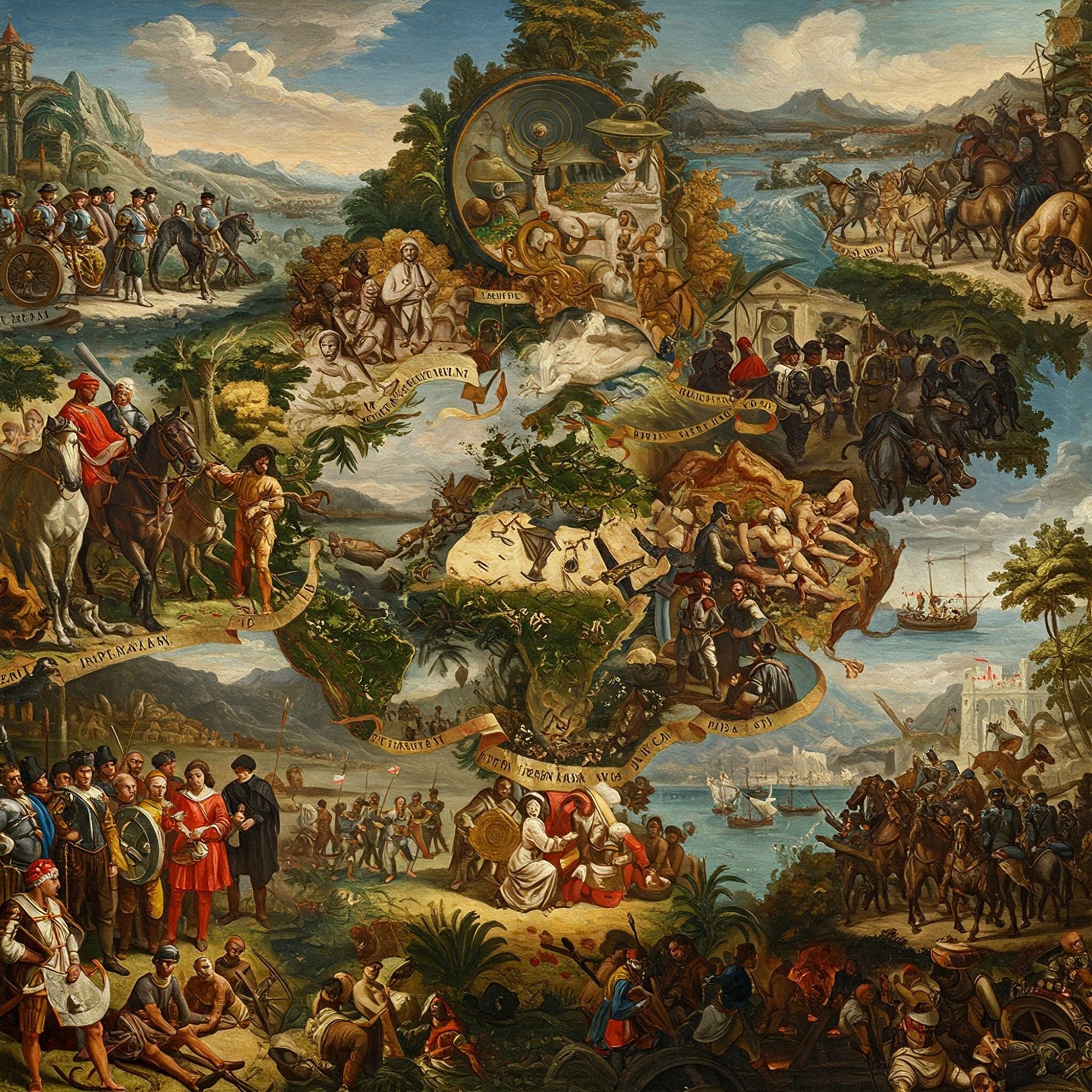
Imperialism has had a long and contentious history. From the Roman Empire’s expansion across Europe, and the Middle East, through the Napoleonic Wars, to the European colonial ventures into India and Africa, imperialism has often led to exploitation, cultural erasure, and economic disparity. The British Raj in India and the scramble for Africa are prime examples where colonial powers not only controlled large territories but also extracted valuable resources, leaving long-lasting impacts on the socio-economic fabric of these regions. Modern instances include the Soviet influence in Eastern Europe and American interventions in Latin America under the guise of spreading democracy or fighting communism.
There are arguments, often from the perspective of the colonisers, that imperialism brought development and Christianity to colonised lands. However, the benefits gained tend to be disproportionately skewed in favor of the imperial powers, with many former colonies still grappling today with the legacies of colonialism, such as extreme poverty, economic underdevelopment, political instability, and cultural alienation.
Trump’s Imperialist Remarks
Trump’s statements extend beyond Gaza. He has previously mused about acquiring Greenland, suggesting that military force might be necessary if negotiations fail, and has threatened economic coercion against Canada to make it the “51st state.” His comments on reclaiming the Panama Canal, which was ceded to Panama by the U.S. in 1999, further illustrate a belief in “American exceptionalism” (American Exceptionalism – Conceptual Thoughts and
Empirical Evidence, Johannes Thimm, Paper für die Tagung der Nachwuchsgruppe “Internationale Politik” der DVPW 13./14. Juli 2007 Darmstadt) where U.S. interests supersede international norms. This ideology has historically led to conflicts, such as the Vietnam War (where millions of lives were lost) and various interventions in Latin America, where tens of thousands of people lost their lives and hundreds of thousands more were displaced.
- How many people died in the Vietnam War? (Britannica)
The Question of Sovereignty and Consent
Does Greenland’s population desire annexation by the U.S.? Or is this about countering China’s influence in the arctic? Because it can’t possibly be now acceptable for powerful nations to randomly impose their will on weaker neighbors in pursuit of raw materials?
If we accept Trump’s logic as fair game, are we also saying that it was permissible for Russia to annex Crimea, and parts of Eastern Ukraine? Would it be permissible for South African leaders to wake up one morning and decide to extend their country’s borders northwards into neighboring Namibia and Botswana? Or to annex Lesotho? What about China’s claim to territories in and around the South China Sea? Wouldn’t such actions, if based merely on the whims of a leader, in the absence of any genuine democratic process (excluding of course sham referanda) be seen as gross violations of international law?
As things stand, the international community largely agrees that annexing territories without consent breaches the sovereignty of nations, a principle enshrined in the UN Charter. Thus, if these actions are not acceptable for other countries, in 2025, why should the U.S. be exempt from these universally accepted conventions and standards?
The Danger to World Peace

This “wild west” gung-ho approach to international relations, where military might takes precedence over international law, may be an attractive fantasy to Trump’s MAGA base. But it threatens global stability for the rest of humanity. Trump’s imperialistic rhetoric could lead to a resurgence of territorial aggression, as some large countries may be emboldened by the US example and start throwing their weight around, undoing decades of progress towards recognising and respecting national sovereignty. Jonathan Chait writing for the Atlantic puts it this way:
‘An easier question to answer is why Trump keeps uttering these threats. One reason is that he seems to sincerely believe that strong countries have the right to bully weaker ones. Trump has long insisted that the United States should seize smaller countries’ natural resources, and that American allies should be paying us protection money, as if they were shopkeepers and America were a mob boss.’
In the 21st century, the sanctity of national borders should be upheld, and territories recognised under international law should remain with those to whom they belong. The idea of the U.S. annexing Gaza is as vexatious and unlawful as say Canada annexing Seattle. Instead of imperialistic expansion, the focus ought to be how to extend nationhood and autonomy to marginalised peoples of the world. And not on elaborate schemes of stripping them of their land.
In conclusion, it’s noteworthy although not surprising that Donald Trump’s recent statements starkly contrast with his earlier or even more recent pledges. In a speech at the United Nations General Assembly in 2019, he promised “America will never apologize for protecting its citizens…. but we will always pursue peace”. Sending troops into Gaza (or anywhere else for that matter) under the guise of development or peace would be a direct contradiction to this promise, or indeed his idea of “America First”, and can potentially fuel further unrest rather than quelling it.
References:
- “Trump’s Performative Imperialism: Greenland, Panama Canal, and Beyond.” (The Atlantic)
- “Trump, the ‘America First’ Candidate, Embraces New Imperialist Agenda.” (PBS NewsHour)
- “What Imperialist Game Is Donald Trump Playing with Greenland?” (The New Yorker)
- “Russia clears the path for China in the Arctic” (GIS)
 malawiace.com