

A couple of days ago, the Minister of Trade and Industry, Engineer Vitumbiko Mumba criticised what he called “job creation deniers” who dismiss self employment as legitimate work. Mumba said those critics who were dismissing young Malawians who got loans from the National Economic Empowerment Fund (NEEF) with the intention to start businesses, were ignorant and did not understand the struggles of ordinary Malawians.
In general, we share Mr Mumba’s views on entrepreneurship. We’ve often highlighted in our articles how starting a business can offer young Malawians a route to financial independence and help grow Malawi’s economy. After all, many others have done just that and gone on to build thriving businesses. Here, please allow me to give an example of InteWaste, which is a locally grown business in Lilongwe that has thrived by solving a local problem. There are many others like them. (Note that I have deliberately picked a small company as an example, and not larger operations as those of Simbi Phiri (Khato Civils) or Napoleon Dzombe which are also notable from a Malawian context.)
Ofcourse when done at a small scale, and in the absence of specialist assistance to help those beneficiaries of NEEF loans scale-up, and grow their businesses and become employers, it may not always be sustainable. But when done right, it sure can create solid businesses.
That’s why we support for example the building of Incubation Centres as was announced last year at Mzuzu University, a project sponsored by the World Bank.

But breaking down what Mumba said about “job creation” into specific issues it raises is a heavy topic for another day, because while micro-loans can help individuals, they are not a substitute for the large-scale infrastructural investment that most parts of Malawi urgently need.
Anyway, moving on to the issue of cement.
So here, what we don’t fully agree with are the statements that the Minister has made about ending the shortages Malawi has with manufacturing and procuring of cement. For the benefit of those who are not aware, Malawi’s cement sector has been experiencing many problems including high prices, shortages, and foreign currency constraints for a while now. This in turn is affecting the construction sectors and making it difficult for people to complete projects within budgets.
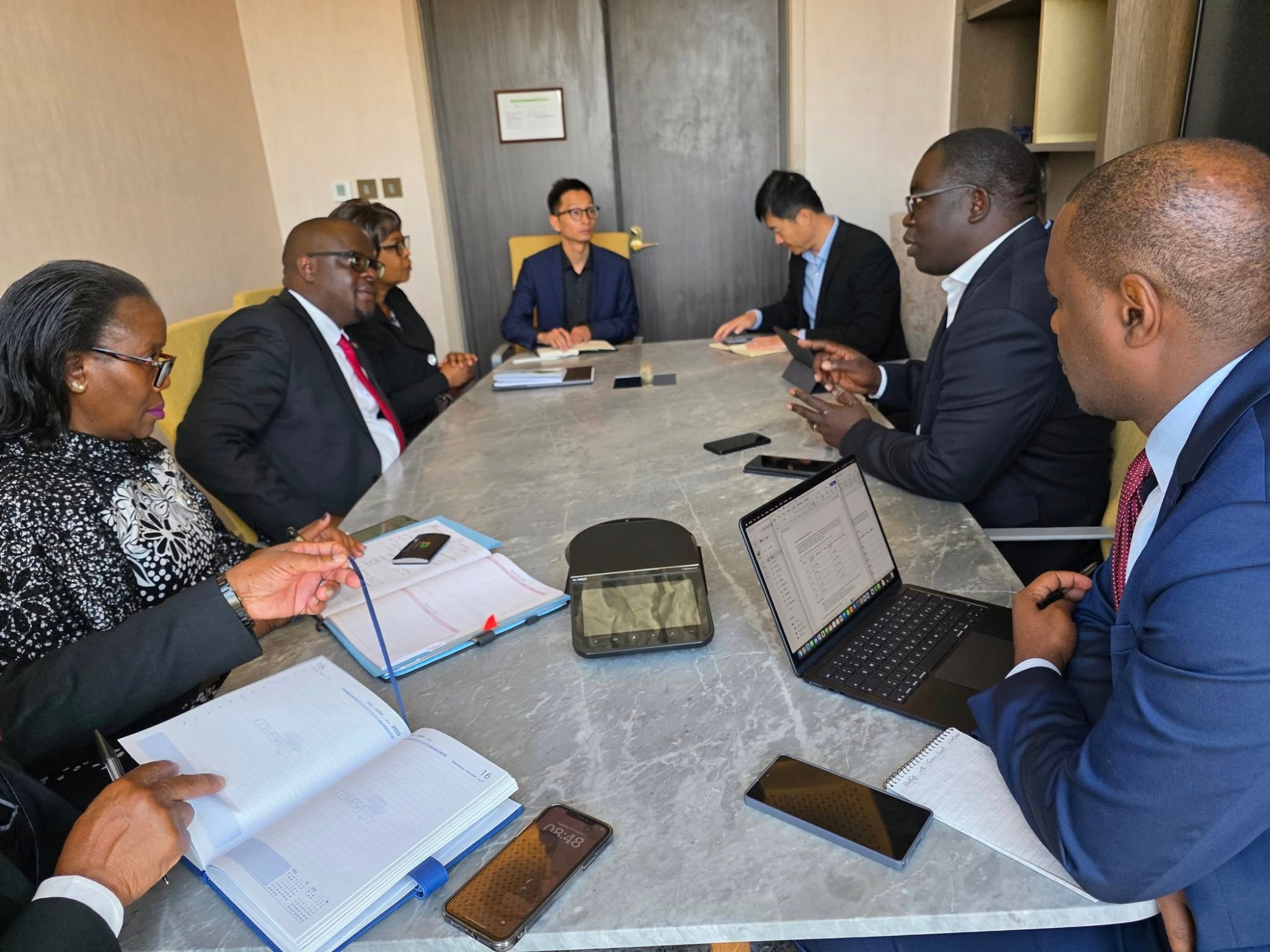
Mumba said he had gone to Zambia to sign deals with Sinoma Cement and Chilanga Cement. and that 12,000 bags of cement were now en-route to Malawi from Zambia, and would arrive by Wednesday (yesterday). He said the move would lower down prices, which he said were being used as a manipulation tool against the MCP government of Lazarus Chakwera by “cement cartels”, to influence the upcoming election. Mumba said the industry had asked for a 10% surcharge on imported cement so that we promote the Buy Malawi Strategy amongst several other requests like a 10.5% guiding value on imported cement and a restriction of the importation of cement and by selectively issuing import licenses. He said Chakwera’s government had obliged to all those requests but that the industry was now raising cement prices at will with the aim of influencing the outcome of the September 16 Malawi Elections.
All well and good. And yes, its plausible that certain nefarious actors are using cement, in the same way that they used the hoarding of sugar to drive up prices, as well as foment dissent against Chakwera.
But clearly, importing cement from Zambia (or indeed anywhere else) has to be a short term move, because in the long term, a different strategy is needed – if you truly want to save costs. What I mean is, are we going to rely on importing cement as a long term solution when manufacturing locally would be a lot cheaper? Why can’t we double or treble the numbers of cement manufacturers within the country – if we truly want to break the “cement cartels” Mr Mumba talks about? This goes also for fertilizer, sugar, fuel and several other important materials by the way.
Two years ago, in August 2023, before Vitumbiko Mumba became minister of Trade, the Malawi Government, through the Ministry of Industry and Trade and the Competition and Fair Trading Commission, warned traders against exploiting cement shortages by overcharging customers. The authorities expressed concern over excessive price hikes at the time for both imported and locally produced cement, stating such practices violate the Competition and Fair-Trading Act. They vowed to take action against traders found engaging in these malpractices and urged manufacturers to find sustainable solutions to the supply issues. Manufacturers attributed the shortages to limited access to foreign exchange, which hindered the importation of essential raw materials like gypsum, clinker, and coal. The government also called on the public to report any instances of overpricing and assured that current ex-factory cement prices should not exceed MWK 16,000 per 50kg bag.
But there was no price cap set or legislated into law.
Two years on, a 50kg bag of cement in some areas in Malawi now sells for upwards of MWK43,000, typically between MWK30,000 and MWK45,000. And so, clearly, between 2023 and now, something has gone terribly wrong.
So then, while importing more cement may be a short-term measure, in the long term, I believe we need to increase the number of manufacturers of cement within Malawi. But here, let’s also go back a little bit to 2020, in that in 5 years, why didn’t the government of Chakwera notice that just having a handful of cement manufacturers was a potentially bad thing? Was it a lack of vision, or poor leadership? What about the handful of fertilizer manufacturers we currently have? The handful of sugar producers… ?
Please indulge me a little bit here. For example Egypt has at least 60 cement manufacturers including National Cement Company {a state owned entity and the largest single-site plant in Beni Suef with 6 lines and a capacity of approximately 6 Million metric tonnes per year}, Cemex Egypt, Italcementi Group, Lafarge, Titan Cement, Suez Cement – Heidelberg Cement Group, Sinai White Portland Cement Co., Arabian Cement Company, and others. Nigeria has at least 10 cement producers including Dangote Cement, Lafarge, BUA Cement, UniCem, Ashaka, Cement Company of Northern Nigeria, and others, whereas Ethiopia has at least 20 manufacturers. Tanzania has 13 cement manufacturers including Tanzania Portland Cement (Twiga), Tanga Cement (Simba), Dangote Cement. Kenya has at least 7 including Bamburi, East African Portland, Mombasa, National, ARM, Savannah, others, while South Africa too has at least 50 cement manufacturers including Pretoria Portland Cement, Sephaku Cement, Lafarge, AfriSam, and many others.
As you can see, almost every major African economy, or African economies that are being predicted to grow and be a big deal in the coming years and decades have at least 7 different cement manufacturers. Most have a lot more. That should tell you something.
So why can’t we open our eyes and commission say 3 state-funded and state owned cement factories a.s.a.p to be located strategically across the country? In areas where raw materials are in plentiful supply, or can be delivered to with relative ease? Wouldn’t that be a better strategy? As far as I can tell Mumba hasn’t hinted anything along those lines, which is probably another example of short-termism in full-display. We’re fighting fires today, without thinking about what happens tomorrow.
Why are we afraid to start small?

One of the most frustrating aspects of Malawi’s development is its painfully slow pace. Too often, people hesitate—held back by fear or reluctance to take initiative. Even the government’s processes are needlessly slow and bogged down by idiotic bureaucracy, further stalling progress. Why can’t we streamline things and make it easier to get things done?
I mean a lot of these things are not that complicated. And Malawi can very easily access and employ technical stuff to bring such projects to fruition within a year or two, if we worked hard and at “full speed”. Let me give you another relevant example (which I’ve probably highlighted before somewhere on this website).
Embraer S.A. is a Brazilian multinational aerospace corporation that makes aircraft. The company, which was state owned until 1994, started as a small company funded by the Brazilian government because building an aerospace sector was a big priority for the government of Brazil from the 60s-80s. Embraer was founded in 1969, first to build military aircraft for the Brazilian Air force, but it is now the third largest producer of civil aircraft worldwide after Boeing and Airbus. At the time of its founding, some people in the media mocked Brazil and the company, and thought it wouldn’t succeed. This disparaging attitude stemmed largely from perceptions of Brazil as a developing nation associated more with economic instability, poverty, and cultural stereotypes than with high-tech industries like aerospace. Critics doubted the country’s ability to design and produce complex aircraft locally, especially given the dominance of established manufacturers in the U.S., Europe, and Canada.
A 1985 academic article in the Journal of Air Law and Commerce described Brazil in the early 1970s as “a tropical country best known for Carnival, inflation, and poverty,” portraying it as “an unlikely candidate for such a ‘high tech’ industry.” It further noted that “most foreign experts greeted news of the venture with amused skepticism. Chances of success were characterized as ‘rather dim.'” A 1992 World Bank report on Embraer notes that during the mid-1960s development of the Bandeirante (which became Embraer’s flagship project post-founding), “initially there was much skepticism that an airplane of that complexity could be designed locally.” Similarly, a 1987 New York Times article on Embraer’s growing success retrospectively captures early market skepticism: “Who, after all, would want to fly in Brazilian planes when similar aircraft from, say, the United States, Canada or the Netherlands were available?”
Today, Embraer’s shares are publicly traded on the New York Stock Exchange and in Brazil (B3), and no one questions the company’s success anymore.
The haters, and critics are long gone, and have been proven wrong.
And the company has done very well financially such that in 2023, Embraer’s revenues were US$5.27 Billion with much of that revenue coming from jet orders from across the world.
The reasons I give the example of Brazil and Embraer is because it perfectly demonstrates how small beginnings, can over time balloon into large undertakings. Because imagine if Brazilian officials and entrepreneurs who were involved in the project at the time decided just to import foreign aeroplanes.
Oh, its too expensive, oh we can’t be bothered, oh let’s just import aeroplanes from the U.S.
If they had taken a defeated and retrogressive attitude, we probably would not have had the Embraer that we have today, nor jobs for 23,000 people across the world that the company currently employs.

So, we shouldn’t be afraid of starting small. We may have to have a cottage industry in some sector for a while, for several years, maybe even decades, but if we persist and invest, and continue learning, and continue innovating, and grow those operations, locally, then regionally, and finally internationally, great things can happen. As in Billion-dollar level of greatness.
There are many other examples across the world of small beginnings that over decades grow to become major industries serving global markets, like the following:
- Apple Inc. – Apple famously started in Steve Jobs’ garage in 1976 as a small-scale operation assembling computers. From these humble beginnings, it scaled into one of the world’s most valuable technology corporations, revolutionizing personal computing, music, smartphones, and more. Apple Inc. now has a market capitalization of approximately US$3.41 trillion.
- Hewlett-Packard (HP) – HP began in a Palo Alto garage in 1939, where Bill Hewlett and Dave Packard developed their first product, an audio oscillator. The company expanded rapidly, becoming a global leader in computing, printing, and technology solutions. HP Inc. has a market capitalization of approximately US$23.59 billion.
- Burt’s Bees – This company originated as a true cottage industry, with Burt Shavitz making candles and beeswax balms by hand. Over time, it grew into a globally recognized natural personal care brand, eventually acquired by Clorox in 2018 for nearly US$1 billion
You can add Amazon Inc. to the list of companies or undertakings which illustrate how innovative ideas, persistence, and scaling operations can transform small businesses into industry giants.
As Malawians, we should begin learning and adopting the lessons from such examples. And because of the skewed financial system of the world, its easier for a state to start such a large project, than a private company in Malawi.
 malawiace.com