
//Even western countries have a huge problem of inequality / Rights: Gary’s Economics
The West’s migration crisis is often framed as a security or cultural issue, but if you look closely, its roots lie deep in global economic inequality. Let me put it this way, if ordinary people in Africa, Latin America, and other developing regions could access decent jobs, had access to quality educational opportunities, access to capital with which to start businesses, and were assured a stable future at home – free from famine, wars, persecution and free from drug / crime cartels, the incentive to risk dangerous journeys to Europe or North America would diminish. Or at least be extremely minimal.
The solution to the migration problem is not higher walls or stricter border controls. It’s not ICE officers intimidating minorities on the streets, or Vans with facial recognition cameras. Instead, it is a fundamental shift in how Western countries engage with the Global South. It is prioritising equitable resource distribution, sustainable development, and fair economic policies, that benefit the people, not just politicians (or politically connected folk) in the deprived parts of the world.
Is there a link Between Inequality and Migration?
Recent research confirms that economic inequality is a primary driver of migration. The World Inequality Database reports that the richest 10% in the US now earn 47% of national income, up from 34% in 1980, while similar disparities exist globally. When people lack opportunities, they move. The OECD’s 2024 Migration Outlook highlights record migration levels, with 6.5 million new permanent migrants arriving in OECD countries in 2023, many fleeing poverty and instability. Studies show that reducing inequality within and between countries can curb forced migration by addressing its root causes: lack of jobs, weak institutions, and environmental degradation.
Empowering Local Economies

Western aid has often focused on short-term relief rather than long-term empowerment. I believe, considering everything we know about inequality and migration, a more effective approach is to invest in local industries, education, and research centers. For example, “Manufacturing Universities” in Malawi could produce goods and commodities like mosquito nets, medicines, fertilizer, biodiesel and solar panels, creating jobs and fostering innovation. They can also help create and organise labour that plants thousands of trees each month.

For instance, consider Malawi, which has 28 districts. If just ten of those districts each established three cooperatives to manage three micro-plants dedicated to producing organic fertilizer- and these plants then supplied the product to neighboring districts – you can immediately see how this initiative could benefit millions of farmers nationwide. Essentially, farmers would provide manure to the cooperatives and, in exchange, they would receive affordable organic fertilizer.
The OECD’s Development Co-operation Report 2024 emphasizes that ending poverty and reducing inequality are interlinked; so without both, climate change and economic shocks will continue to displace millions, and western countries will continue to have this problem on their hands.
Fair Trade and Corporate Accountability
Trade, not just aid, must be reoriented to benefit local populations. The UN Sustainable Development Goals (SDGs) call for fair taxation and regulation to prevent corporations from exploiting weaker laws in developing countries.
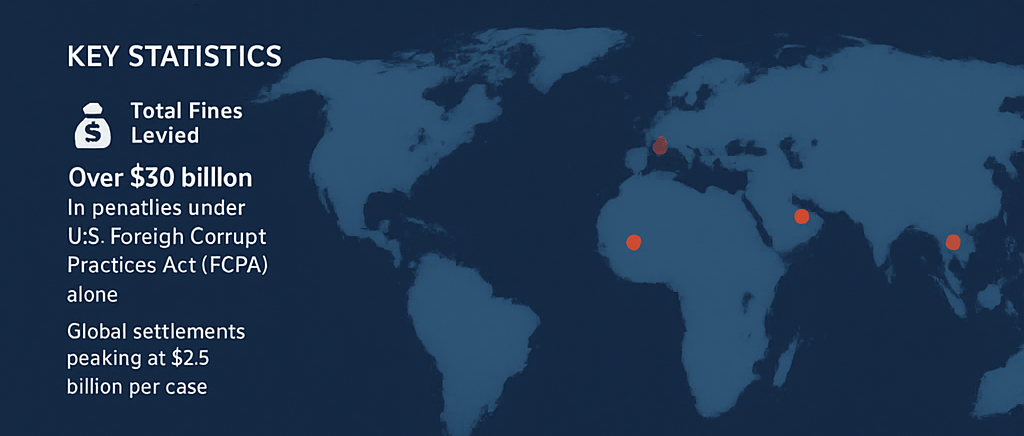
This matters because too many corporations (in concert with corrupt officials) indulge in unacceptable behaviour in developing regions. This deprives the state of these developing / poor countries of valuable resources for development – money that can be used on everything we’ve talked about above (i.e. access decent jobs, …access to quality educational opportunities, access to capital with which to start businesses, and were assured a stable future at home … + decent access to healthcare,etc).
So this is how it works: instead of a corporation paying $300 million in royalties, for a mining interest they’ve started exploiting, they discretely bribe 5 senior officials including a government minister, wiring funds into unknown organisations in UAE, Qatar or some tax haven, organisations connected to the officials (but whose ownership is secret, or cannot be easily discovered). Or they pay for “Consulting Advice”, to the tune of $20 million or such large sums. The minister and his corrupt clique walk away with millions, ….but the country (and its 20 million + citizens) loses out on a potential $300million that could have been used for development initiatives. Now, for western countries like the UK or the US, $300million may not be such a large sum. But for country like Malawi whose economy is only $10.8 billion, it’s nearly 3%, which is a lot!
The Oxfam Commitment to Reducing Inequality Index 2024 reveals that 90% of countries have backtracked on progressive taxation and labor rights, worsening inequality. Western governments must stop tolerating corrupt leaders and ensure that businesses operating abroad pay fair taxes and wages.
One easy way of doing this is by working directly with the people of these countries, and side-stepping the corrupt state machinery altogether. It’s not overreach, but a necessary partnership with the people who have been losing out.
Shared Risks and Benefits
Migration can benefit both origin and destination countries if managed fairly. Remittances from migrants already exceed official development aid, but these flows could be amplified by creating legal pathways to citizenship for those already contributing to Western economies. A proposed “Migration Fund” could compensate countries losing skilled workers (the sources of the immigrants) while insuring destination countries against fiscal strains.
Untangling Racism and Discrimination
Discrimination in host countries exacerbates inequality. The Pew Research Center found that economic inequality is a major concern in over 60 countries, influencing elections and social cohesion. Racism and xenophobia not only harm migrants but also undermine the social fabric of Western societies. Education and policies promoting integration are essential to building inclusive communities.
In conclusion, the West’s migration challenge is a symptom of global economic imbalance spanning hundreds of years. And the solution to fixing it starts with reducing inequality, through fair trade, deliberate investment in local economies, and inclusive policies. This is how Western countries can turn migration from a crisis into an opportunity for shared prosperity. The alternative, walls, fortress mentalities, hostility to migrants, and reactive immigration policies will only deepen divisions and human suffering. The choice is clear.
Sources:
[1] World Inequality Database. (2024). Inequality in 2024: A closer look at six regions [2] OECD. (2024). International Migration Outlook 2024 [3] IOM. (2024). World Migration Report 2024. [4] SDG Action. (2024). Recognizing migration as a symptom of global imbalance. [5] Oxfam. (2024). The Commitment to Reducing Inequality Index 2024. [6] Pew Research Center. (2025). Economic Inequality Seen as Major Challenge Around the World. [7] OECD. (2024). Development Co-operation Report 2024. malawiace.com