
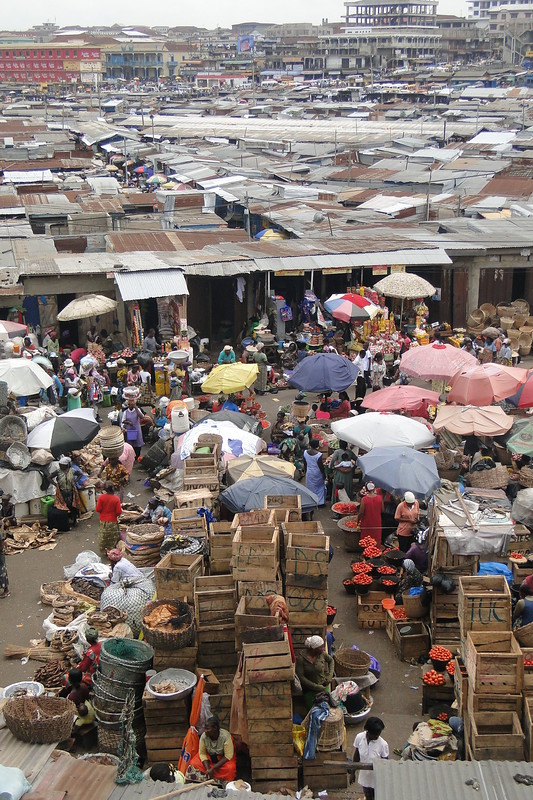
The above picture shows a typical market in an African town. It’s hot, overcrowded, exposed to the elements, noisy, with insects like flies everywhere, it smells, and is rather basic. And by the end of each day, most traders operating in such type of markets have to pack their wares and take them home, because there is no proper storage space anywhere, let alone refrigeration for perishables or foods that have to be kept fresh.
There is no security or basic infrastructure like toilets and running water in most such type of markets. There is no electricity. Traders work long hours in punishing conditions, only to watch some of their goods spoil in the heat or get damaged by sudden rains.
The result is that lots of food gets wasted, and disproportionate effort is expended moving goods back and forth each day, wasting time, and reducing the trading hours.
This was the picture untill the market started being redeveloped in 2015. Today there’s a new market hall that although still in development is miles better than the outdoor market stalls. But phase 1 of the development has cost more than US$250 million to undertake, which is a significant sum. Phase 2 of the redevelopment is ongoing and is also predicted to cost at least another US$250 million.
Women, who make up the majority of market traders, bear the brunt of the inefficiency in old outdoor markets, carrying heavy loads on their heads twice daily while also managing households, including looking after children. Some even take their young children to the market stalls.
It’s a scenario that remains across most parts of Africa, and which shows the hard realities of the lives of market traders. But it needs to change.
So, what if African governments and municipal councils can receive a helping hand from AI, among other interventions to design markets that would work in an African context? Markets that are designed first and foremost to solve and mitigate these inefficiencies?
What would such markets look like?

What does it take to advance our markets from the above picture of a market, to this below?

Maybe the answer lies in using AI to analyse local conditions and generate practical, affordable solutions which can be implemented relatively easily?
AI can process data on climate patterns, foot traffic, product types, and trader needs to design market structures that actually make sense for the people who will be selling goods in the market, as well as buyers. Think covered stalls with proper ventilation that keep goods cool without expensive air conditioning; shared cold storage units that traders can rent by the day; simple lockable storage spaces so vendors don’t have to haul everything home each night; think CCTV as well as a resident nursery school for small children of women who rent a stall. These aren’t luxury features, they’re basic tools and facilities that would immediately boost productivity, introduce efficiencies, make things easier for traders and reduce waste. They’re measures that would help hundreds if not thousands of people. Each tenant would pay a small fee that would be used to pay cleaners and security guards. And to contribute to the cost of repair and maintenance, as well as pay for the upkeep of facilities like the nursery school.

The beauty of AI-driven design is that it can optimize for multiple constraints simultaneously. Municipal councils can use it to figure out how to build using locally available materials, design layouts that maximize shade during peak sun hours, and plan drainage systems that handle the region’s specific rainfall patterns. It can even suggest how to phase construction so that markets can be built incrementally as budgets allow rather than waiting for full funding that may never come in time.

But the real potential goes beyond just better buildings. AI can help design markets as genuine community hubs that serve multiple purposes. Ground floors for daily trading, upper floors for a clinic, meeting rooms that can be hired, and community spaces. They can house skills training workshops as well as have integrated rooftop solar panels to power the facilities including shared refrigeration and phone charging stations. It also means trading hours can be expanded to markets that operate profitably in the evening for cooked food vendors, creating safe, lit spaces that extend economic activity beyond daylight hours.
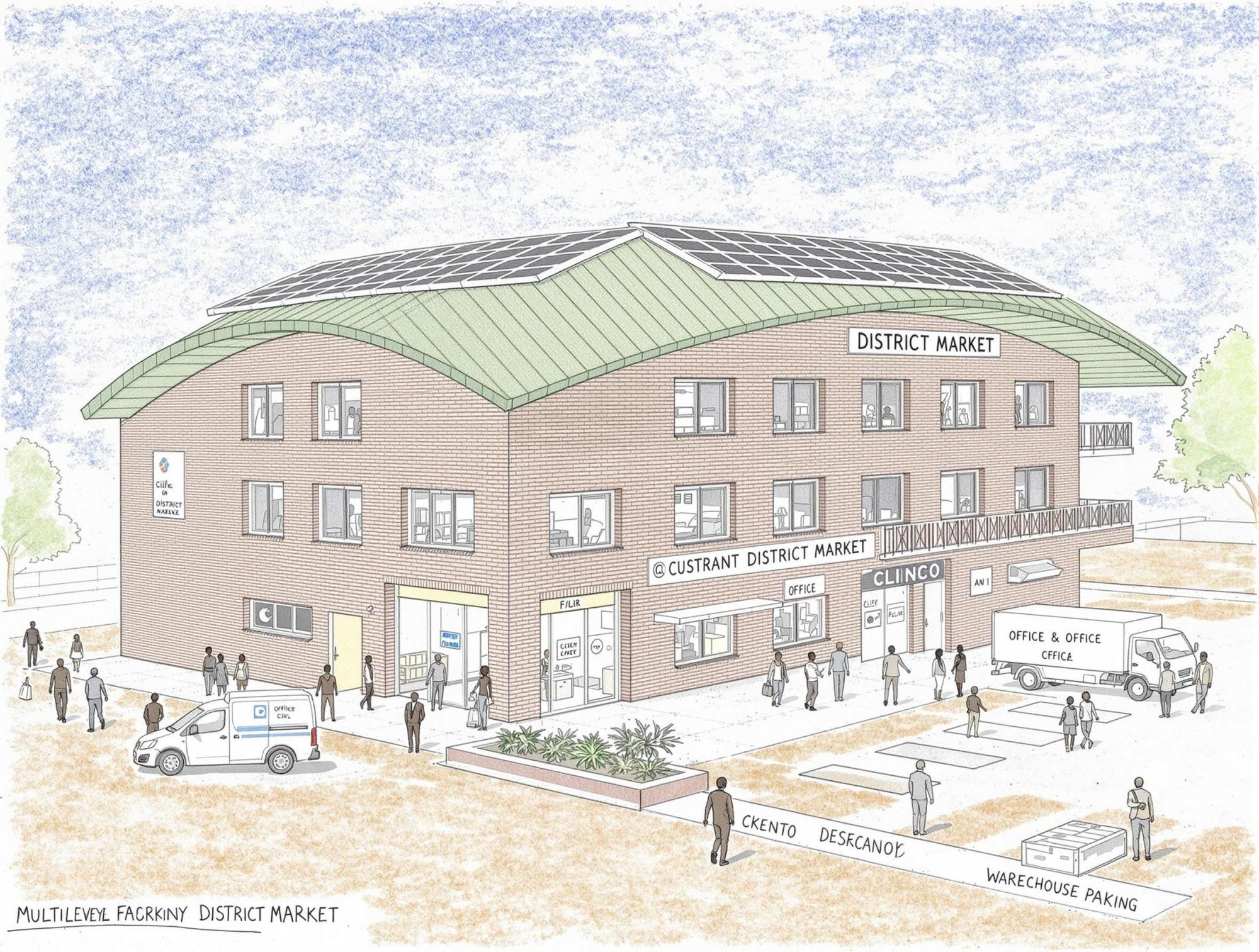
These are the kinds of integrated solutions that traditional architectural approaches often miss. But AI can identify ways to create practical structures by analysing successful examples from similar contexts worldwide and adapting them to local needs and realities.
 malawiace.com