
Malawi faces significant challenges with unemployment, particularly among its youth. As well as unemployment Malawi also faces low productivity in both the private and public sectors. In October last year, the World Bank estimated real GDP to have grown by only 1.8% for 2024. This is an economy whose GDP is only US$10.78 Billion.
However, there are some actionable steps the country can take now to begin to address these issues. Here are eight actionable steps Malawi can implement immediately, to begin to turn its economic fortunes around:
1. Invest in Vocational Training

The Problem: There exists a mismatch between education of citizens and job market needs. This partly explains the high unemployment rate, especially among young people.
One tried and tested solution is to expand Technical, Entrepreneurial, and Vocational Education and Training (TEVETA) programs, focusing on in-demand skills like agribusiness, carpentry, welding, and IT. But the focus should instead be to help empower those who gain these skills to start their own small businesses in these sectors.
This suggestion is not new and has been proposed by countless others before.
What needs emphasizing is that such a move has the power to open up opportunities for the youth, many of whom are unemployed and looking for opportunities. To give you an example, I know a Mathematics graduate from the University of Malawi, who is working as a high school teacher, because that’s what he could find. When he finished his course, there was nobody that could provide him with specialist training, a business loan, & say incubation services and mentorship for him to start and grow a small business.
There are many examples like that in Malawi. And it speaks volumes about the challenges in our economy, to say the least.
Investing in skills can help up-skill youths, for roles or sectors in which those skills are in demand, not just locally, but even internationally. To add to the above skills, Engineering Science & Power Electronics (e.g. specific to solar panel manufacturing) and drone piloting are other skills that can be taught.

In the agricultural sector, you have partners like the Agricultural Transformation Initiative (ATI), MwAPATA institute and others, who are helping young people with training relevant for modern agricultural ventures with the aim of diversifying our agricultural sector. There are several other organisations the government of Malawi could work with.
2. Drive Agricultural Innovation

The Problem: Malawi’s economy relies heavily on subsistence farming, and is limited by low productivity due to use of outdated methods, as well as because of the effects of climate change. And while some efforts have been made to overcome these problems, the majority of farmers still use traditional outdated methods of farming.
One solution is to increase investment in agricultural innovation, particularly in value addition for products like honey, coffee, Moringa, Malambe, and mango, establishing more processing units and factories to create jobs and boost export value. We should partner with organizations like One Acre Fund to promote sustainable farming and crop diversification, while reducing our reliance on tobacco.
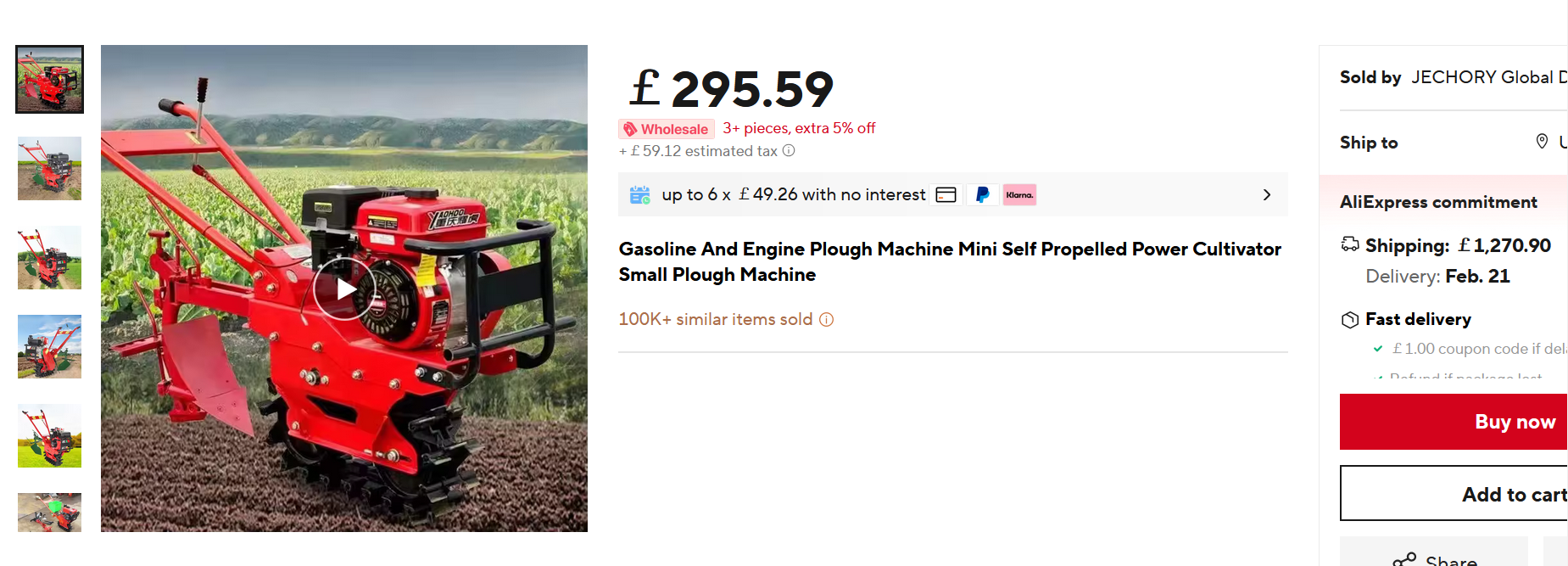
Further, while it may not be possible yet for each village to own a tractor, how about each village owning several cheaper, smaller hand-held plough like this one:
3. Upgrade Infrastructure for Market Access

The problem of poor infrastructure has hindered businesses and farmers alike, presenting high transport costs and limited market access. Further, this problem means there are only few channels to get products out.
The solution I have advocated for many years is to prioritise infrastructure development, especially roads, railways and airports. Malawi needs to revive and expand rail systems to connect major cities like Blantyre and Lilongwe, reducing road congestion and transport costs. Similarly, Salima Airport, Mchinji Airport, Mzimba Airport as well as Mzuzu Airport all need to be rebuilt and expanded into international airports. Because, we shouldn’t have to drive goods (including perishable produce with a short-shelf life) from Karonga or Mzimba, all the way to Lilongwe, to be able to export them. Nor should tourists who want to visit Salima, or Nyika, have to go through Lilongwe. It’s inefficient.
Malawi needs to open up its airspace. It will create jobs, improve access to global markets and help develop other rural parts of the country.
Further, on the roads, this business of driving through townships from one major city to the next is regressive, and slows us down. What we need are major motorways from Blantyre to Karonga, that avoid all the trade centers along the way. This can be made possible by building over-ground or raised sections or by-passes that avoid or traverse above the townships completely, but which connect with existing infrastructure wherever possible.
I hear you ask, who will fund such extensive projects? Well, by exploring partnerships with international infrastructure companies in countries like Brazil, Mexico, Turkey, Austria and Canada, to share costs, devise revenue sharing arrangements and in–source creative expertise, it is possible to fund such projects.
4. Funding for Small and Medium Enterprises (SMEs)
Many SMEs struggle with high borrowing costs and a lack of collateral. Further, some of the financing companies which provide loans have very high interest rates.
The solution has always been the provision of government-backed low-interest loans with more flexible collateral requirements. Combined with a mentorship scheme that provides regular business advice, what we can do is ensure these businesses thrive and create more jobs for the economy.
5. Revitalize the “Buy Malawi” Initiative
Video source: Times 360
What happened to the Buy Malawi initiative? Why don’t we hear about it as often anymore? The sad reality is that in Malawi at the moment, local products struggle to compete with the large supermarkets due to minimal processing and lack of exposure or marketing, among other factors.
What we need to do is increase funding for the “Buy Malawi” campaign, focusing on building brand awareness, helping local manufacturers improve quality (including packaging – which is very important), and expanding market access for local products, first into our neighbouring countries, and then beyond.
In the age of TikTok, and Instagram, this is no longer a difficult thing.
We need to encourage local procurement in government institutions and support local manufacturers to scale up production. This can even mean providing loans for local manufacturers to buy equipment abroad that can be used for value addition.
6. What’s Up with Renewable Energy?

Another problem is high energy costs and unreliable power – which stifle business operations. Further, the recent fuel crises have shown how vulnerable Malawi is to fuel shortages.
The solution is to accelerate the adoption of renewable energy solutions such as large scale residential solar power (micro-grids), to lower energy costs for businesses and households. Similarly, Malawi should introduce a government-backed grant scheme to enable people to buy electric cars supported by the scheme.
This will reduce operational expenses and create jobs in the green energy sector. It will also reduce our dependence on petroleum fuels, and prevent the likelihood of future fuel shortages crippling our economy the way the recent fuel shortages did. And we should be proactive to seek partnerships with international investors to share the initial investment burden.
7. Invest in Sports and Culture:

High youth unemployment is not helped by limited leisure and sports developmental facilities. In some countries, sports and leisure activities provide a means by which gifted individuals can develop their talent, and even use the available facilities to train up to a standard that enables them to compete internationally, or at least with their peers.
I mean, how can kids get sponsorship to the commonwealth games, when they don’t even have local opportunities to develop their athletic or sporting talents?
So while we have Tabitha Chawinga playing at the highest level at PSG, and several other prominent sports personalities, we actually need to develop and harness a lot more sporting talent.

And that means increasing investment in sports facilities, supporting more sports leagues and investing resources into cultural programs across Malawi’s districts. Such a move will engage young people and can create professional opportunities in sports and tourism. For example, we need funds to build more tennis courts, more track sports facilities, and several more swimming pools. These sporting facilities can be twinned with other community services like clinics, libraries and community halls, to enable them to be more cost-effectively run.
8. Malawi needs a state owned money Transfer company
I have addressed this issue before several times, including here, 9 years ago. And I stand by my thoughts now, as I did then.
Most people who send money to Malawi or the surrounding countries don’t do it using banks because bank charges are quite expensive. This means they send money back home to Malawi, or Zimbabwe or Zambia using the likes of Western Union, Moneygram and the like. Or using informal conversions with people they know, who have bank accounts in both Malawi and in the diaspora country in which they live.
So you have people who are sending millions from abroad into Malawi, from various countries. And the transfer fees they pay is being paid to private companies that do not invest in Malawi.
Why can’t we have our own money transfer company whose revenues helps bring Forex into Malawi? Isn’t this one of the simple ways that can help solve Malawi’s Forex shortages? In 9 years, no one has provided me with a convincing explanation why such an action wouldn’t be a good idea.
I believe the above eight actionable steps can help Malawi make significant strides in addressing its productivity and unemployment challenges. Each initiative requires not only financial investment but also strategic partnerships and a commitment to long-term development. The government should show leadership and spearhead ways in which the public and private sectors can work together effectively to achieve the above goals.
 malawiace.com