How can the global community unite under a common endeavour that offers an opportunity for resilience and sustainability against coercive behaviour from large countries?
Why do we forget history?
Humanity’s greatest flaw is its cyclical amnesia. History teaches us valuable lessons, yet we often fail to heed them, or even remind each other about them. Thucydides, the ancient Greek historian, warned that “the strong do what they can, and the weak suffer what they must” — a dynamic evident in the Korean and Vietnam Wars, where superpower hegemony inflicted untold suffering. Centuries later, philosopher George Santayana’s adage — “Those who cannot remember the past are condemned to repeat it” — rings alarmingly true. In philosophy as emphasized by the likes of Plato, we’re told again and again that, “Those who forget history are condemned to repeat it.” Similarly, Heraclitus warned, “Character is destiny,” suggesting that our collective memory shapes our future actions. Forgetting history not only risks repeating its mistakes but also erodes the human spirit’s capacity for peace and progress.
Today, as geopolitical tensions rise and economic coercion by dominant powers intensifies, the world risks sliding back into an era of exploitation masked as diplomacy. The post-1945 international order, built on multilateralism and shared prosperity, is fracturing. And in a world where Apps such as TikTok and X/Twitter are many orders more popular than the best Philosophy and History resources out there, the past will be forgotten. And mistake will be made.
Current Economic Vulnerabilities and the Need for a New Framework
The global economy faces significant challenges, because there exists an over-reliance on a few dominant economic and military powers like the US and China. This is problematic to say the least and skews the normal interrelationships between countries that should exist on our planet. It can be detrimental to world peace, economic stability, and equity. And as has been seen at the UN, it creates tiers that are unfair and whose effects are undesirable. Furthermore, the dependency on relying on just a few major players creates vulnerabilities that can be exploited for coercive diplomacy or economic sanctions. Sanctions which while beneficial or tactical for the large economic powers, do not serve the global community’s interests.
While Global economic growth appears stable at 2.7% in 2024 (Source: https://blogs.worldbank.org/en/developmenttalk/the-global-economy-in-five-charts–the-outlook-for-2025-26 ), extreme poverty reduction has stalled, and low-income nations risk falling further behind. Reliance on the U.S. or China for trade, technology, or security is unsustainable and focuses way too much power in the hands of only two players. Their rivalry fuels fragmentation, affects markets, and creates division into opposing camps.
Emerging powers like BRICS nations and regional blocs in Africa (ECCAS, SADC) and Asia (ASEAN) should grow to challenge this unipolar dominance, yet are unable to do so because of various reasons including systemic inequalities. Even the EU sometimes appears to be on the back foot, and is more reactive than a world leader who sets the agenda.
But despite all this, it remains true that there exists a universal desire for happiness and peace
Thus, to counter coercion and address the above vulnerabilities, the world desperately needs a new framework for global development.
A New Vision: Unity Through Shared Prosperity – A Co-developed Megacity

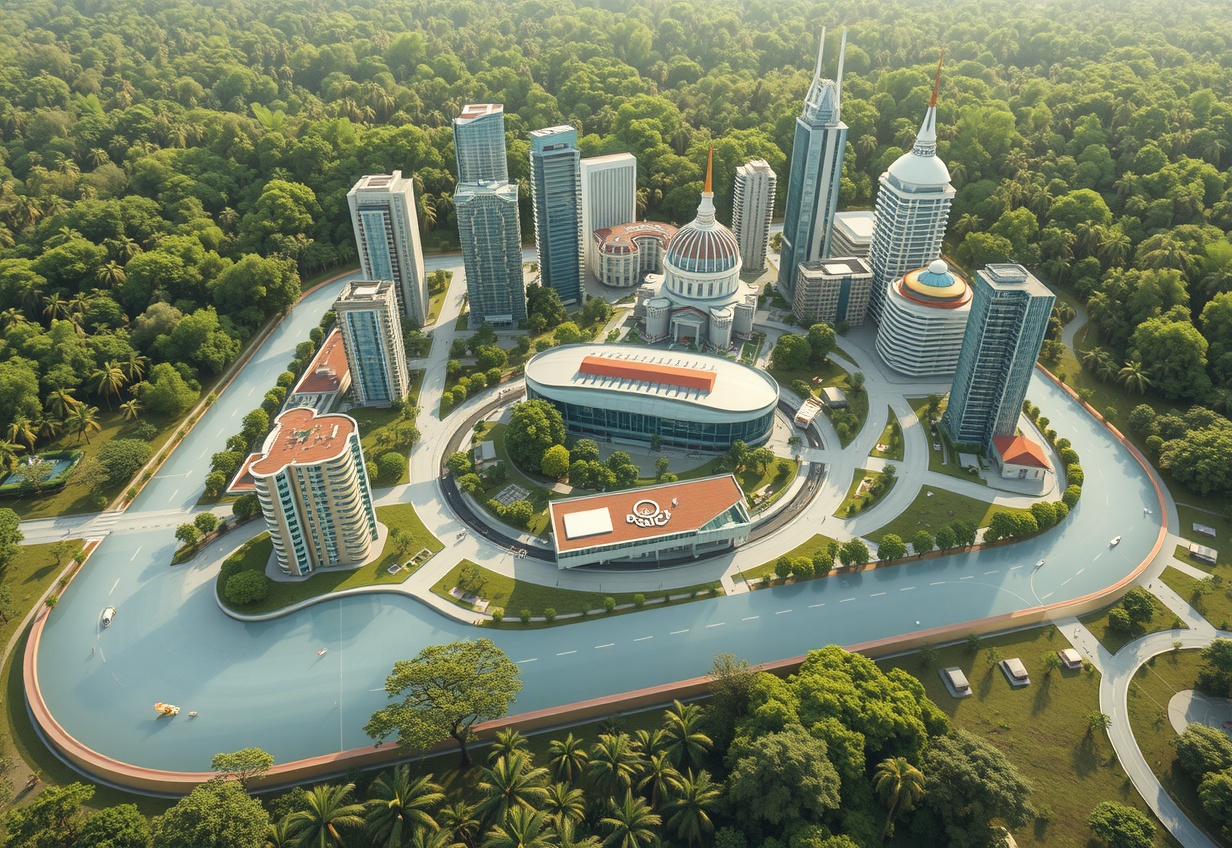
To address these issues, I propose a radical yet feasible concept: the creation of a new city that would become a beacon of global unity and innovation. This city, which could be modeled on both Singapore and Vienna (scaled for a global citizenry), would be one of the first of its kind, and would be built by a consortium of at least 98 countries (at least half of the number of recognised countries in the world), fostering a microcosm of global cooperation.
Instead of lamenting over issues like economic inequality, illegal migration, or the scars of war, why not engage in a large but transformative global project that aims to shift the balance of power?
This proposal invites the world to collaborate on developing the Democratic Republic of Congo (DRC) into the major power it deserves to be, addressing universal problems through collaboration and unity. lt would be the unmistakable Revolutionary Pact for Our Time, and has all the tenets to that effect.
Common challenges

Illegal migration and health inequities are symptoms of a broken system, and almost all the countries of the world suffer from them in one degree or another. You could add climate change to that list, which also affects all countries. In the case of the DRC, regional conflict in the East, with the presence of the M23 rebels exacerbate an already fragile situation.
And yet many of these problems arguably haven’t been adequately addressed with a real solution in decades. But nation states continue to push narratives that paint the victims as wrongdoers. When often, their suffering or displacement is merely a survival story.
So, instead of futile endless complaints, why not build a tangible alternative — a city of real opportunity where universal basic income is standard, where green tech thrives, where citizens feel secure, where migrants are welcomed, and where for once the Global South has an equal voice and footing as everyone else sat on the table. As renown economist Richard Wolff argues, tackling inequality requires structural shifts, not charity.
This would arguably be the biggest structural shift since the creation of the United Nations.
By uniting at least 98 countries under a shared vision, with common goals, what we can achieve is democratize development and begin to insulate the global economy against the vulnerabilities of relying on the US and China.
Why the DRC? Opportunities and Challenges
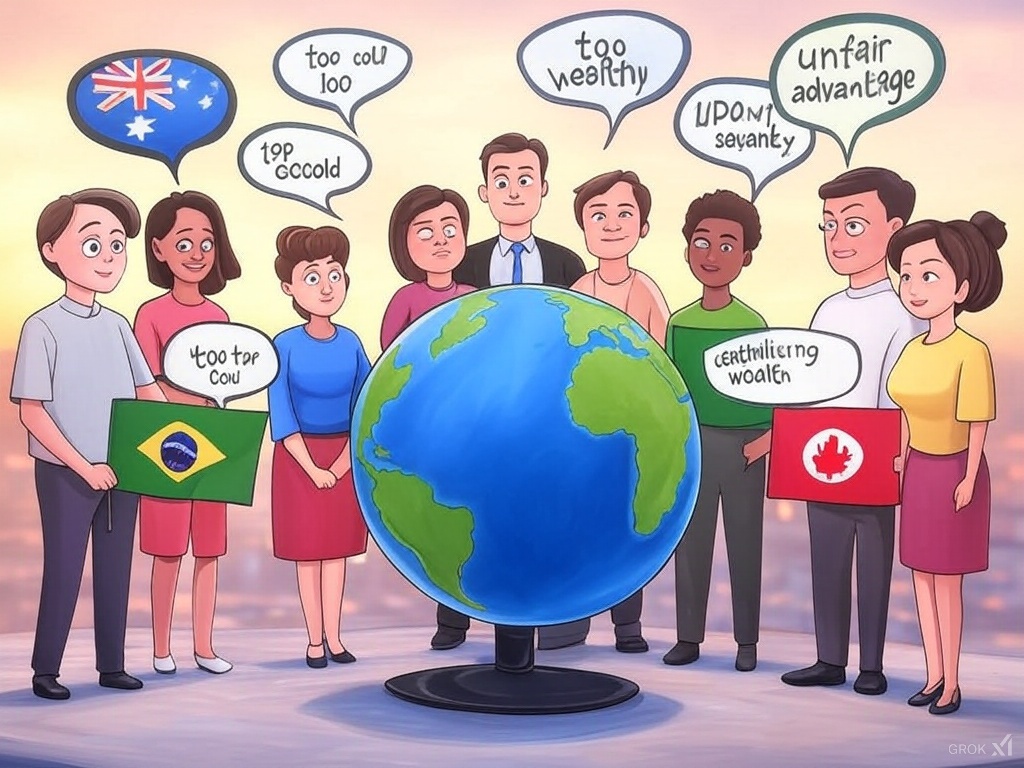
If you tried to build a Global City in Australia, many people will say it’s not central enough, it’s too far and doesn’t have enough raw materials. Also, Australia is already a developed nation. If you tried to build your city in Greenland or Russia, many people will say it’s too cold and doesn’t have enough raw materials like wood. Further, it’s in the northern hemisphere, and their land isn’t great for agriculture. If you tried it in Saudi Arabia, some people are going to say why build a Global City in the dessert where it gets too hot? We’ll just end up wasting too much power on air conditioning. If you said what about Brazil, Brazil’s neighbours are going to object and ask why you’re not building it in their countries? Further, they’ll highlight Brazil’s admirable economic advances since the 50s, and claim it’s unfair to give more to whom much has already been given. If you tried it in Nigeria, Nigeria’s neighbours will be mad. They’ll say that Nigeria is already Africa’s biggest economy besides South Africa. And if you proposed to build it in the US, you’d defeat the whole point of your argument. Why concentrate wealth into the very same few hands in which it’s already too concentrated?
So, you probably want the location to be somewhere which re-balances global inequalities, and creates new markets and harnesses new communities. Somewhere that hasn’t seen such a generational shift before.
But there’s another important reason. Take a look at this map from Google (which I’m aware is not a 100% true representation of the real world). What do you notice about the DRC’s location?

It’s nearly central from everywhere else. Being on the equator (and with 2 time zones), the DRC is nearly at the centre of all the “corners” of the world.
But the most important reason for attempting this ambitious project in the DRC is that the country is endowed with at least $24 trillion in mineral wealth. Ofcourse this fact is a paradox: a nation rich in resources but crippled by conflict and extractive exploitation.
Still, the DRC’s untapped potential is staggering: Home to 70% of the world’s cobalt and vast copper reserves, critical for green technologies; a strategic location as Central Africa’s gateway, with access to the Congo River and proximity to regional trade hubs. Further, the proposed Grand Inga Dam, a $64 billion hydroelectric power project that could power the continent, makes it a perfect location to attempt this colossal infrastructure project.
We’re in agreement that there exists many governance and ethical considerations to comb through. But imagine a 21st-century city nestled in the DRC’s lush forests, a stark contrast to Dubai’s transformation from desert to metropolis. Vast land, rich resources, and a large local population which would provide a foundation for sustainable economic growth. Isn’t that a noble vision?
The city could be the size of Vienna, utilizing modern urban planning, eco-friendly technologies like vertical farming (to prevent clearing forests), and advanced manufacturing technologies.
Yes, there would be many challenges: corruption, armed conflict, and displacement for infrastructure projects. All this would require solutions. As would preparing against tropical diseases and logistical hurdles. These are significant issues, but are not insurmountable with a unified international response. The new city would need to prioritize local agency and inclusive labor policies — no land grabs, no raw material exports without value addition, and no predatory or otherwise unfair taxation regimes. The DRC’s history of colonial plunder — from Belgian rubber extraction to modern-day “conflict minerals” — demands a clean break from exploitative models.
Thus, by involving the Congolese in governance and ensuring fair compensation for any displaced communities, the project would redefine developmental ethics.
Blueprint for a 21st-Century City: Governance, Economy, and Ownership

Envision a Vienna-sized metropolis embedded in the Congo Basin, blending eco-innovation (vertical farming, solar grids, wind energy) and manufacturing facilities, education facilities, offices and factories, hospitals, water and sewage systems, churches & other religious places of worship, airports and everything else in between.
The city would be legally owned by the DRC but operate under a special economic zone agreement, ensuring clearly defined local benefits while inviting global participation. In particular, a Special Economic Zone under DRC law would be set up, ‘leasing’ the development and administration to the 98-nation+ consortium for 299 years, with eventual sovereignty reverting back to Congo after that time period.
Governed by a Mayor and a city assembly elected by residents — a mix of Congolese (an initial allocation of 5,000 residential permits) and global talent from contributing nations committed to residency (1,500 residential permits to each country that signs up). An inclusive residency model would grant initial quotas to every country after the first 3 years (Initially 100 per country, but subsequently 200 per country annually), prioritizing those with high skills and who commit to living in the city full-time. The system would balance opportunity with practicality, focusing on skills contributions and in-demand occupations. The economy would mandate local value addition — minerals processed into batteries, not exported raw — fostering local job creation and tech transfer. This city would become a hub for global trade & innovation, and would develop specialities in EV battery recycling, Solar Panels manufacturing, Pharmaceuticals manufacturing, Vertical Agriculture, and Agroforestry among other industries.
It would be a new market for everything, from tech to traditional crafts ,and would help increase connectivity across Africa.
There would be significant advantages for the DRC (possibly doubling the economic output) as well as stimulating Global Trade.
But who will fund it?
Investment would come from a mix of sovereign wealth funds, multinational corporations, and innovative financing tied to the DRC’s natural resources, ensuring sustainable economic growth. African countries would be asked to contribute, as would the diaspora community who have a vested interest in seeing African countries develop.
However, it’s important to ensure that such an exercise doesn’t slide into the largest gentrification undertaking in the world. An opportunity for deceitful speculators to move in and build expensive developments that are unaffordable to the new residents. It’s not London, New York or Monaco we’re trying to create. Instead , it’s the best example of a combination of everywhere else.
So, rent controls would be necessary to ensure that accommodation is affordable for the majority of residents – many of whom will probably be low wage earners, and workers in construction, extractive or manufacturing industries.
Besides Sovereign wealth funds (like ADIA, CPP Investments), tech giants, and multilateral banks would also be invited to invest. Other stakeholders could include nations with energy expertise (Qatar, Saudi Arabia, and Norway); and those with indepth infrastructure development expertise (the EU and China). Part of the collateral could be the DRC’s mineral reserves, with manufacturers processing everything within the city and at least 10% of the profits reinvested into education and healthcare across the whole country to improve other parts of the country.
Implementation would start with an international treaty and a feasibility study, progressing through phases, involving construction firms from around the world, backed by a diverse investment pool from global stakeholders. A year-long feasibility study led by firms like BCG, Accenture and McKinsey, paired with drone-mapped land surveys would be a good place to start in the process of mitigating some of the risks.
Some specifics:
A management consortium would be formed to manage each and every aspect of the development. This would be followed by each of the 98 countries committing to send a protective force of 500 soldiers and police officers. These would travel and be stationed around the area on which the city will be built. This would be followed by 45 construction companies from some of the countries that sign up (no more than 3 construction companies from each country) being selected by a competitive open bidding process (based on experience) for development loans. They would be tasked to initially build 3 Airport cities spaced apart roughly 35 miles from each other in a triangular configuration. Subsequently, they would be tasked with building other necessary infrastructure including housing for at least 500,000 people.
To conclude, I know that such an endeavour would require significant amounts of resources, a considerable number of contractors & huge amounts of manpower. I know it would require a lot of work and a mental shift in how cities have previously developed. I also know that there would be a lot of criticism from environmental groups and those who in the comfort of their peaceful existence, forget about the millions of people out there who also aspire to a life of dignity, peace and security.

Most brilliant ideas will face doubt and skepticism at some point. But, precedents exist: NEOM (Saudi Arabia), a $500 billion desert smart city which is under construction; the plans for the construction of the Grand Inga Dam, whose promise of energy could redefine African industrialisation. Cayalá, new city in Guatemala City (as seen in the video above). And projects like Próspera, a semi-autonomous city in Honduras, all show that such enormous construction projects like is being proposed herein are possible.
As the world braces for at least 4 years of a government with nationalistic policies in Washington, and as Eastern Congo experiences another fresh wave of violence, it’s at precisely this pivotal moment that we need the DRC. It’s for this exact set of circumstances that the DRC needs us.
So, let us forge a common future together where history remembers not our wars, but our courage to unite and together build something revolutionary in the best interests of humanity. These ideas may come across as audacious, but so was the Marshall Plan. Thus, at this moment in human history, tackling our greatest challenges most definitely requires a revolutionary solution.
This is it.
#DemocratizingDevelopment, #GlobalEconomy2025, #EndEconomicCoercion, #DRCDevelopment, #SustainableGlobalGrowth, #MultilateralCooperation, #BRICSUnity, #GreenTechInnovation, #CongoBasinCity, #SharedProsperity, #EthicalResourceUse, #GrandIngaDam, #GlobalSouthRising, #InclusiveCitizenship, #ClimateSmartCities“The only way to deal with an unfree world is to become so absolutely free that your very existence is an act of rebellion.” — Albert Camus


This is very interesting piece. It reminded me of two excellent books written by economic advisors: “That used to be us” by Thomas Friedman and Michael Mandelbaum and “The world is curved” by David Schmick. We forget that most major investment is a blend of different capital – government and private and venture capital. We must work together.
LikeLiked by 1 person
[…] the past, in a previous piece, I have proposed one way of divorcing the world from the dominance of one or two global powers: a […]
LikeLike