
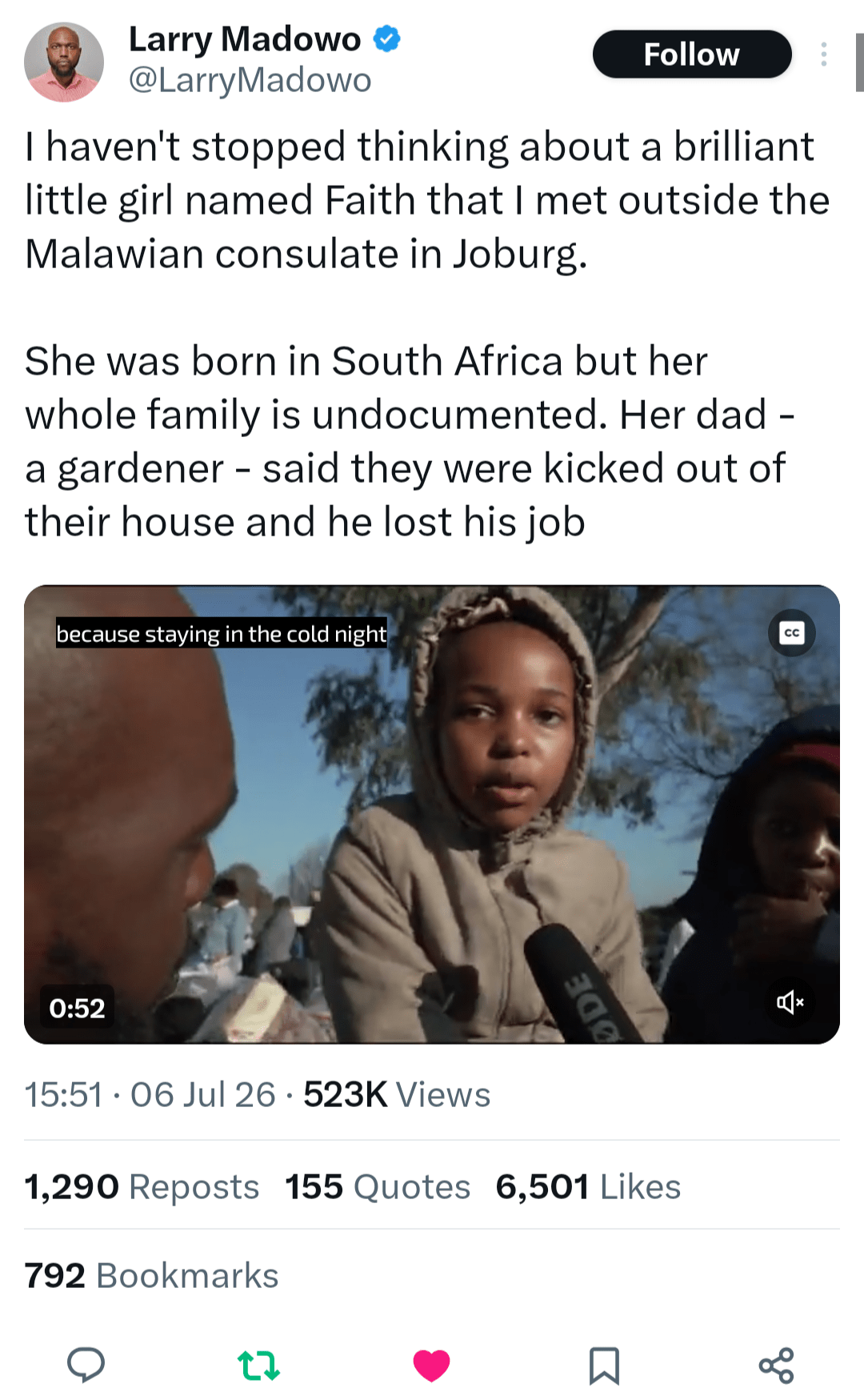
Loans to Malawians? What? This guy, what has he been smoking?
I know exactly what some of you are thinking right now after reading the title of this article.
“Amwene, where will the money come from? Boma lake litilo? Lomweli limene likupemphapempha? We’re forever pleading with the IMF and the World Bank. We’re even begging for funds to bring our people back home, how on earth can we afford to start handing out 0% interest loans?”
That question only makes sense if you assume our leaders have exhausted every creative option of raising funds that’s available to them. And surprise surprise, I don’t believe that they have.
Penapake, we have to start behaving like a country that actually believes in its own future? That believes in the abilities of its own people? Anthu inu, tiyeni tiziganiza bwino bwino. What is all your education for?
Dziko ili la Malawi is blessed with valuable mineral resources, including rare earth minerals that are becoming increasingly important in the global economy. And we have hundreds of skilled Engineers not just in Malawi, but across the world. Rather than treating these resources simply as something to be licence out to an Australian or a Canadian mining company, why not establish a government-owned mining interest? That mines, refines and markets the resource? And to finance such a concern by issuing sovereign bonds backed by the future value of those minerals?
Dangote has showed us how these things should be done, tikuwopa chani?
Anthu inu, penapake sitikuganiza bho bho. We’re missing the biggest trick in the nation-state fundraising handbook. Our collective fear and timidity is hurting the future prospects of our great grandchildren.
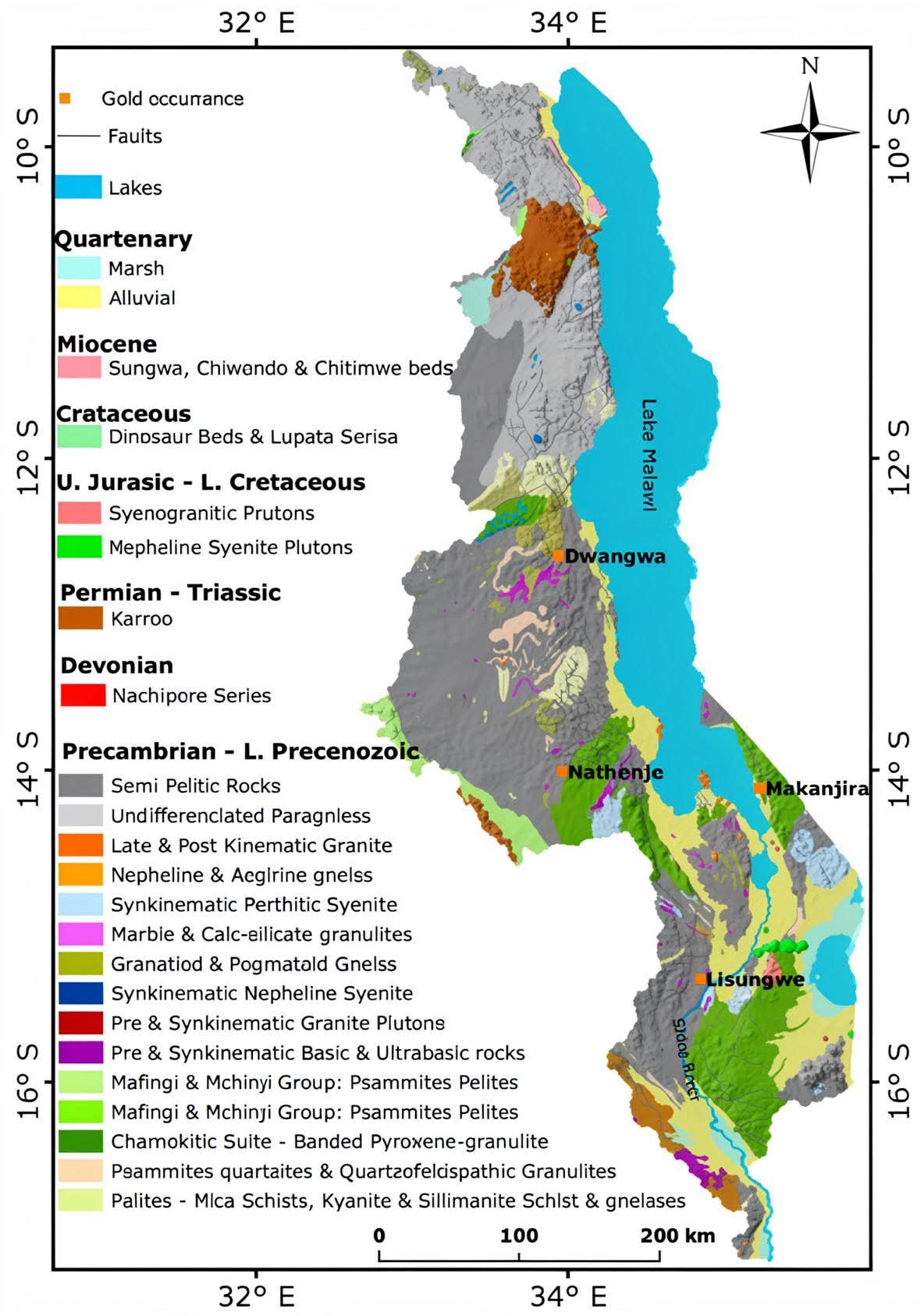
Before someone jumps in claiming that every mineral deposit has already been signed away, please wake up.
Do you honestly believe every viable rare earth deposit in Malawi has already been contracted to a foreign company?
Ah, inu, please don’t be ignorant. Kafufuzeni nokha. Take a good look at that map above. Bwino bwino mtima uli m’malo. What can you see?
The fact is that there are still enormous opportunities if government has the vision and courage to pursue them. Across Malawi, there are vast tracts of land with significant mineral potential that remain largely unexplored or undeveloped. We simply need leaders prepared to think beyond the next election and start investing in the country’s long-term future. That’s it.
This isn’t some crazy idea that I’ve dreamt up one morning after one too many shots of Spiced Rum. Governments around the world have been raising capital by leveraging the future value of their natural resources for decades. The principle is simple: if a country possesses valuable assets that will generate income tomorrow, it can use part of that expected future income to finance developmental projects today.
Take Brazil, for example. In 2009, Brazil secured a US$10 billion loan from the China Development Bank, backed by future oil production from its offshore reserves. The financing helped support investment long before all of that oil had been extracted. And dividends the investment did pay.
Then there’s Angola. Beginning in 2004, the country raised billions of dollars through loans secured against future oil exports. Those funds were used to rebuild roads, railways, hospitals and other infrastructure following years of civil war.
Even South Sudan, despite its conflict and political instability, was able to secure substantial financing by borrowing against future oil revenues after gaining independence in 2011. I’m certainly not suggesting Malawi should copy South Sudan’s model, but it does demonstrate one important point: investors are willing to finance countries based on the future value of their quantifiable natural resources.
So then, why can’t the leaders of our country Malawi think just as boldly, so that we unshackle the country from the chains of bad debt? We possess rare earth minerals that the world increasingly needs for electric vehicles, wind turbines, smartphones, the defence sector, and other modern technologies. With proper governance, transparency and professional management, there is no reason why Malawi could not explore raising capital through a sovereign bond backed by future revenues from those resources, rather than always waiting for the next IMF or World Bank programme.
Instead of constantly begging for another bailout, it is time Malawi grew a spine and attempted something ambitious for itself.
Raising enough money to bring stranded Malawians home is actually the easy part. Despite all the logistical challenges, the repatriations themselves aren’t the hardest part.
Giving the repatriatees dignity once they arrive back home is the harder part. Because we’re dealing with thousands of people who essentially have… nothing. And they’re coming into an economy that’s also struggling. If they needed help to leave a hostile, but relatively wealthy environment, what are the chances they’ll need help once back in the hardship that’s in Malawi?
Another question I should tackle, which some people will be thinking about is this: “Why should the government of Malawi (GoM) give them loans? They don’t owe them anything. These people chose to go to South Africa by their own volition. GoM didn’t send them to SA!?”
Well, my answer to that is that GoM should help them because it is the right thing to do given the circumstances. And that if we do not help them, we may end up with a bigger internal problem in the long run.
Many of the people who leave Malawi in search of greener pastures are not chasing luxury. They are escaping unemployment, poverty and hopelessness. They’re running away from tribalism and nepotism. They are our brothers, sisters, sons and daughters. Cousins, nieces and nephews. When violence erupts and they lose everything overnight, in some cases to thugs who loot their belongings, we ought to “be their keeper“. We cannot simply shrug our shoulders and say, “It’s not our problem.”
That is not just unpatriotic, but it’s also cowardice. In fact I’d go as far as say if we don’t support the returnees, we’re essentially letting the xenophobes win. Because the dream, the ambition of our people – when they went to South Africa – would have been left behind. Lost and extinguished by the shouts of “Mabahambe“. And that’s just really messed up. It’s an example of evil winning over good. And we shouldn’t accept that.
Further, what this tragic episode has exposed to the world is something many of us have known for years. But which we probably don’t like to admit. And it’s that far too many Malawians are economically vulnerable.
Not just poor. But extremely vulnerable.
They are living just one unexpected crisis away from total financial ruin, and a single pandemic away from absolute bankruptcy. It is a devastating reality, and we cannot just stand by. If you’re Malawian, your blood is crying out to God for you to take action. Whatever you believe in, the spirits of your ancestors expect you…to do something.
But here, please lets reason together. Consider other countries with large migrant populations. Whether it is Mexico, Iraq, Ghana or Venezuela, citizens working abroad often have enough financial resilience to return home independently when crisis strikes – whether that crisis is in Europe, South America or Africa. Governments may organise evacuations, but the numbers requiring complete financial support are usually relatively small. Even India and China have large emigrant populations outside of their countries – who if push came to shove, would be able to pack their bags in the foreign lands in which they reside, and return home without too much of a fuss.
Malawi appears to face a very different challenge.
If more than 10,000 of our citizens require assistance following xenophobic violence, that is not simply an immigration issue. No, that’s a national economic emergency. It’s a catastrophe.
It tells us that thousands of our people have no savings, no financial safety net and no realistic way to rebuild their lives if disaster were to strike. And that state of affairs should concern every policymaker in Malawi.
Ok, so now to the solutions: what might the intervention I’m suggesting here look like in real terms?
Suppose a well-designed sovereign bond programme succeeded in raising US$100 million (Yes, just $100 million).
If such were pursued it means we can allocate about US$25 million to a revolving fund offering interest-free loans of US$2,500 to each of 10,000 returning Malawians. This would help them settle . Penapake poyambira, be it to start a business, buy equipment, secure accommodation or buy a piece of land. It’s not a huge amount of money, but it’s something.
We can also use US$20 million to invest in partnership with reputable housing charities and non-profit organisations to develop affordable settlements and decent homes for returning families, as well as the poorest citizens. I know this is possible because there are quite a few of such non-profits who build affordable houses at very low cost.
We can then dedicate US$30 million to offer grants of ~US$10,000 a piece to small and growing Malawian businesses that can create jobs and absorb returning workers into productive employment, as well as create jobs for young people.
The remaining funds can be used to establish a permanent youth enterprise and skills loan programme so that future generations have opportunities here at home instead of risking everything abroad.
That, in my view, is how a crisis such as this can become an opportunity.
Instead of merely transporting people back to Malawi and wishing them good luck, we should be helping them rebuild their lives, once on the ground. And we should do so with the kind of efficiency we would require – if the tragedy happened to us.
Perhaps then fewer young Malawians would feel compelled to leave home with no financial cushion and no backup plan.
This conversation is bigger than South Africa.
It is about the kind of country we want to become.
Anthuni, we can’t continue reacting to emergencies by asking foreign institutions for help? Or by launching one fundraising campaign after another.
Don’t get me wrong. I’m not suggesting that those who have started fundraising campaigns have done anything wrong. Quite the opposite. Their compassion and willingness to help fellow Malawians in this hour of great need is highly commendable and deserves our full support. All the work the embassies have put in should be applauded. But, in the long term, charity is not a sustainable solution for a crisis of this scale in the 21st century. Anthu inu, not in 2026. If we’re struggling like this in 2026, where are the foundations for a thriving economy for our grandchildren 70 or 80 years down the line?
I know I’ve said this so many times on here, but what we should be building is an economy where people no longer feel compelled to leave Malawi in search of basic opportunities, only to find themselves in countries where their dignity can be stripped away by violent mobs on the streets. Our ambition should not simply be to rescue Malawians when tragedy strikes abroad. It should be to create a Malawi where far fewer people feel they have no choice but to leave in the first place.
It’s high time we start building innovative, home-grown financial solutions that invest in our own people. So that at least those at the bottom of the societal pyramid feel they have a stake in the national cake.
This issue deserves urgent national discussion as we clock another year since independence. In any normal country, what our people have gone through in South Africa would force the wheels of government to get into motion and start creating systems that would lessen the impact of similar future crises.
But sadly, those currently pulling the reins of power in Malawi seem preoccupied with tomorrow’s politics rather than tomorrow’s economy. We can condemn South Africa all we like, but those condemnations, as necessary as they are, won’t create a thriving economy in Malawi.
And that lack of vision, unfortunately, is another of our country’s problems.
// Featured Image Rights: Limpopo Chronicle//

