
Imagine if Saulos Chilima was still alive today.
Imagine if the shady shenanigans that led to his death never took place. What would the world look like?
I can say that without fear or favour, because I think we all saw from the inquiries that have taken place that too many lies were told by too many people who had something to hide, for the circumstances surrounding his death to truly make sense.
If you go back in time, the official story, from the 2024 commission and from Germany’s BFU, is weather and pilot error: a Dornier 228 flying into conditions it should not have entered; no cockpit voice recorder, no flight data recorder, an emergency locator whose battery had been dead for years, navigation aids on the charts that no longer existed on the ground.
That was the no fault record.
It is also the record that a second parliamentary inquiry was opened in 2026 because those earlier reports left holes big enough to fly another plane right through (conflicting visibility testimony, expired safety kit, a military aviation culture that treated “scud running” as normal, and a rescue system that could not even find its own aircraft quickly enough).
When the state cannot keep a plane which the vice president is allowed to use airworthy, and then cannot give the country a clean account of why it fell out of the sky, trust dies with the passengers rather quickly.
That is not conspiracy. That is how normal human beings react to competence, or the lack of it.
Now look at the pattern that outlived Chilima. Back in the days, long before the events of 10th June 2024, Bingu wa Mutharika also had spats with his vice presidents. But unlike Chakwera, he did not lose Malawi because of fuel queues and a collapsing kwacha. He also picked a fight with the press. He threatened to arrest journalists for “lies.” He banned government advertising in The Nation. He waved a colonial insult law at editors. A reporter was arrested for photographing Ndata. By the time the July 2011 protests came, large parts of the country had already decided the president was a liability they could no longer afford; more interested in being obeyed than being believed. Unnecessary battles no one was interested in fighting had been fomented, which lost him so much support.
Those battles also lost the country valuable time.
If Malawi’s leaders did not fight unnecessary battles, guess what would happen? They would suddenly have time with which to actually do the important work of development.
But how can you as a leader develop a country when you are too busy fighting each and every foe; too preoccupied with deliberating in each and every non-issue?
Anthu inu, look around the world today, countries are doing big things. BIG THINGS. Even across Africa – there’s real development happening.
Burkina Faso, under a government the West loves to hate, is claiming gold output above 94 tonnes in 2025. Growth is hovering around 5 percent. They have been removed off the FATF grey list, and in terms of infrastructure have had more roads built at a pace we in Malawi can only announces at rallies.
Burkina Faso now has a five-year Self Reliance plan they say will be financed mostly by internal resources. You can dislike Traore and the junta all you like, but numbers don’t lie. They are winning and are definitely not spending the year arguing about who gets the Cabinet bag.
Rwanda is signing real paper. This month, Paul Kagames government took a 25 percent stake in a tungsten venture with Almonty, a scheme that was introduced through a US economic framework that is aimed at a critical metal the Pentagon actually cares about.
When was the last time Malawi’s government negotiated a 25% stake in anything substantial?
Let’s take a good look of ourselves in the mirror. Because we’re not advancing. And part of the reason is the nonsense that we keep fomenting at Capital Hill.
Meanwhile in Rwanda, Energy projects (Nyabarongo II, Kivu methane, even a nuclear programme on the books) are being treated as industrial policy, not campaign slogans. They are actually delivering on promises they’ve made.
Then, there is Botswana, which although is not having a perfect year, is still managing to rebuild fiscal buffers and pushing cheap credit and grants through CEDA into small and growing businesses.
That is what a responsible country does. It’s what governance is supposed to look like.
And if Rwanda and Botswana appears too remote, bwanji a neba pompa pa Zambia apa. They too are moving forward. They have signed rail rehabilitation deals, a pharmaceutical plant has broken ground in Lusaka; there are talks with Vedanta, the Indian Mining Conglomerate to expand Konkola and build power for it. And Chinese money is pouring into Ndola Lime. They have Copper, railway projects, pharmaceutical projects, and energy generation projects.
But definitely not a presidency-versus-vice-presidency soap opera.
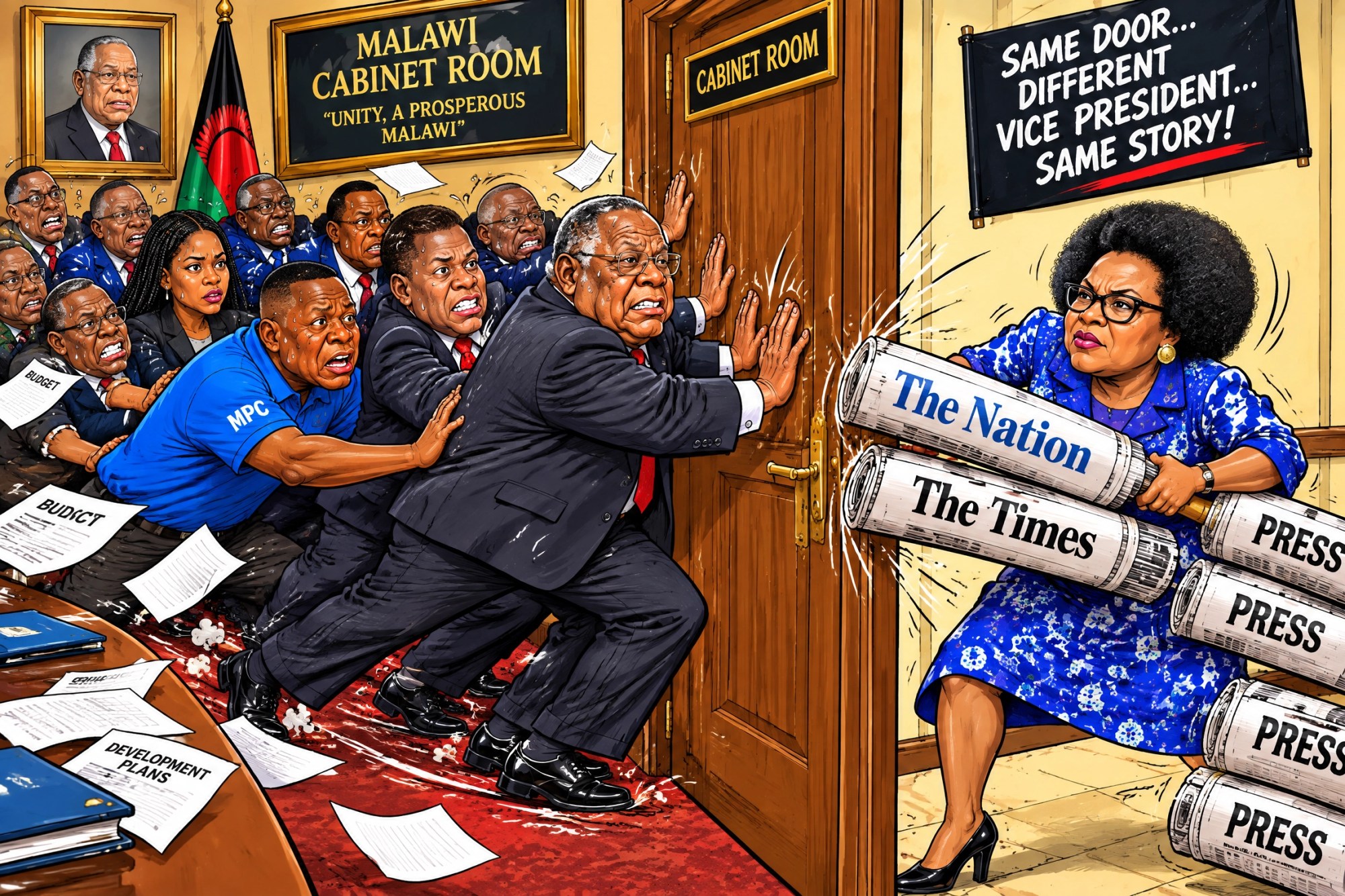
Whereas in all that time, Malawi’s president, Peter Mutharika, barely eleven months in his second stint at the helm, is already having a public President–VP spat with his vice president Dr Jane Ansah.
Just as previous occupants of the presidency did with previous occupants of the vice presidency. For the benefit of non-Malawians reading this article, let me list them: Justin Malewezi, Cassim Chilumpha, Joyce Banda, Khumbo Kachali, and of course Saulos Chilima.
Only Everton Chimulirenji was spared this fractious treatment, and not because Peter Mutharika suddenly learned how to keep a deputy close. His tenure simply ended for reasons that had nothing to do with any personal rift.
What the hell is wrong with us?
Since multiparty politics returned in 1994, the vice presidency has been less an office than a waiting room for political harassment.
Why, oh why are Malawi’s presidents always sabotaging themselves by picking grossly unnecessary fights?
Peter Mutharika could have avoided all this. He could have simply decided to be the one leader who gets along perfectly with their Vice President. He could have broken the ‘curse’.
And to be fair he started with lots of goodwill. They almost always do. The people were happy to get rid of Lazarus Chakwera’s incompetent government. The fuel, fertiliser and food shortages, the high inflation and the sense that the centre could not hold was enough to piss off a majority of Malawians.
Voters were done with ministers and connected men who could get dollars from the formal system and walk them onto the black market, when they couldn’t. We knew the names of the people who were looting even during scarcity.
But the single most devastating issue that killed Lazarus Chakwera’s MCP was the circumstances surrounding the death of Saulos Chilima.
That issue single handedly helped deliver Mutharika more than 56 percent of the vote.
So, one has to wonder why after voters have given you a downright majority would you squander it carelessly like that?
Malawians want to know who is forcing Peter Mutharika’s hand against Jane Ansah?
She said yesterday that someone within DPP is sidelining her. And that her relationship with Mutharika is “fine.”
That last sentence is the most dangerous one in Malawian politics. Every dumped vice president said the relationship with the president was fine, until it wasn’t. Portfolios already stripped: disaster management, public service reform. The office reduced, yet again, to hollow protocol.
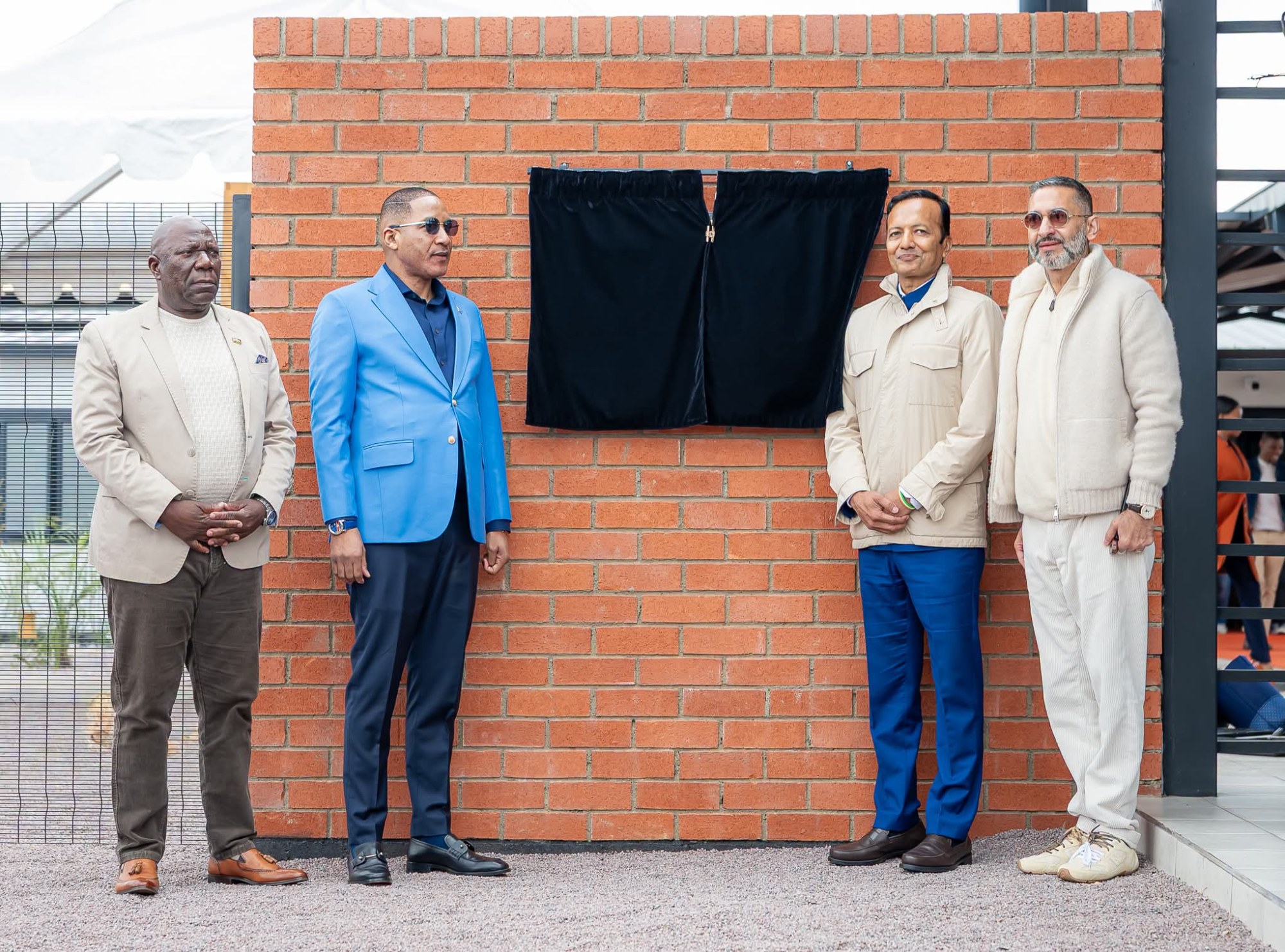
Right now diplomatic errands are being handed to others instead. That’s never a good sign.
And to be clear, this is not about whether Ansah is perfect. She chaired the Electoral Commission in 2019; that history was quite problematic as every Malawian knows. But this is about whether a president who asked the country for a second chance is going to spend year one fighting the oldest, stupidest, most unnecessary squabble in the Constitution – when he clearly doesn’t have to.
Development work is boring work. It is fertiliser arriving before the rains; inspite of the conflict in Iran; inspite of the Russia- Ukraine war. Development is forex that stays in the banks, fuel supplies that are affordable, it is planes that have working beacons. Development is building the infrastructure that doesn’t thank you; factories, rail lines and bridges, some of which may only be complete after your term in office has ended. But development also includes making sure your people are fully utilised. And that means a vice president who is given real work instead of funeral attendances.
Saulos Chilima spent years being underutilized. It was a painful spectacle to see even at the time for Malawians who knew just how capable he truly was. I keep saying this and I’m going to say it again here: if we keep sidelining or blocking opportunities from those of our people who are truly capable – we’ll never develop or move forward as a country.
Today, Mutharika is yet again choosing the feud, instead of taking the high ground. He’s choosing to listen to voices which are encouraging him to perpetuate the very same ‘curse’ that was probably most responsible for the downfall of his first government. The very central factor that led to people losing trust in Lazarus Chakwera and MCP. Ironically, both episodes featured Saulos Chilima.
Chilima is dead, but Malawians have not forgotten the painful history. Indeed, they’ll not forget the painful history. And instead of State House showing humility and doing what DPP said they would do (when they said they had learned from their mistakes), Mutharika is once again closing the door not just to his vice president. But also to wise counsel.
That is not destiny, but sabotage. Sabotage of the electoral ticket. Sabotage of the mandate which voters wearily gave. And sabotage of the country that keeps paying for both.
As Malawians, we are just so tired to see our leaders still singing the same old self-destructive song.

