
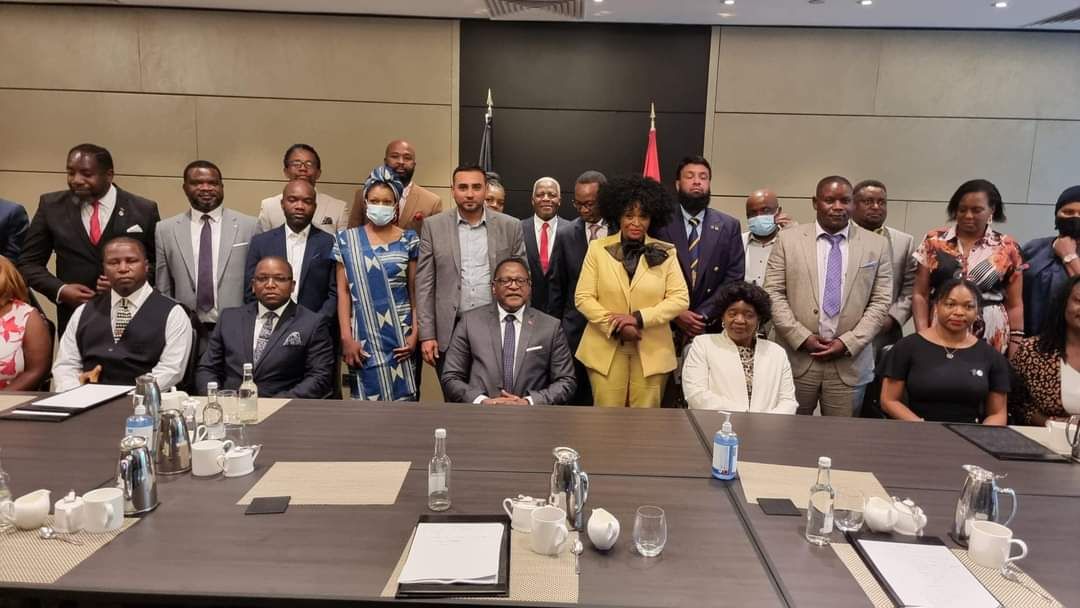
Malawi has not done enough to utilise the potential of its diaspora. If you compare with how the diasporas of other countries are skillfully utilised to supercharge the nation state, it’s clear that Malawi has not done anywhere near enough to utilise it’s diaspora populations across the world.
To put things into perspective, the United Nations put the number of Malawian emigrants at around 311,000 in 2020, and that is widely seen as an undercount. Add the thousands working informally in South Africa, Zambia, Mozambique and Tanzania, plus established communities in the UK, the US, Ireland, Australia and the Gulf, and the real figure is far higher. These are hundreds of thousand of people spread across southern Africa, Europe, North America, Asia and the Middle East.
These people have families back home and regularly send money to Malawi from the countries where they live. That money pays for everything from house building and small construction projects to school fees, hospital bills, funerals and farm inputs. The World Bank recorded roughly US$187 million in formal remittances in 2024, down from almost US$319 million in 2021. That’s before counting the money that moves through informal channels because the official exchange rate makes formal transfers unattractive. Malawi has also long been one of the most expensive countries in Africa to send money to.
So why can’t the Malawi Posts Corporation run its own international money transfer service? At the moment our post offices mostly act as pay-out counters for foreign operators like Western Union, MoneyGram, Mukuru and WorldRemit. The fees, the data and the customer relationship all stay abroad. A low-cost digital corridor backed by the state and linked to the post office network that already reaches rural Malawi would keep more of that value at home. You can go further with this by truly cementing the idea of a Diaspora Bank: foreign-currency accounts, diaspora mortgages, savings bonds and investment products built for people who earn in pounds, rand and dollars but want to build in kwacha.
These people also need land, both farming land and land to build houses on. So why can’t Malawi create special interest zones specifically for its diaspora? It would work like this. Government, working with local councils and traditional authorities, sets aside blocks of land near growth centres and along key corridors and services them, with roads, water and power planned in from the start. Plots are surveyed, titled, and then sold or leased directly through embassies, high commissions and an online portal. Buyers pay in foreign currency, and the money is held in escrow until title is transferred. Farming blocks would follow the same model, with irrigation and links to cooperatives and buyers built in. In one stroke you remove the biggest fear of every Malawian abroad: sending money home for land, only to find the plot was sold twice, that it never existed or that it has quietly been occupied. And ontop of that you bring hard currency into the country at the same time.
Is that really that hard?
Further, most of the people in the diaspora have acquired specialist knowledge…why can’t avenues be created for seamless knowledge transfer. It may sound like a crazy idea, but in a forward thinking country, the state literally should scout professionals from the diaspora, and pay them to give public lectures in Universities and town halls, across the year, on a rotation basis. You’ll be amazed what such knowledge dissemination would unlock…
Most people in the diaspora have also built up specialist knowledge in medicine, engineering, law, finance, technology, logistics, agriculture, teaching and the creative industries. Why can’t we create routes for that knowledge to flow home easily? It may sound like a crazy idea, but a forward-thinking state would actively scout professionals in the diaspora and pay them to give public lectures in universities, colleges and town halls throughout the year, on a rotation. On it’s bare bones, this project for example involves asking Dr Kaunda to give two lectures – one at MUST and one at LUNAR while he’s on his holiday back home from Germany, in exchange for $250 fee. You can then add short placements in hospitals, ministries and businesses, and remote mentoring for students and young professionals. You’d be amazed what that kind of knowledge sharing would unlock.
This could be paired with grant programmes for small businesses, and with cooperatives for certain trades and industries, from honey, chillies and groundnuts to macadamia, coffee, soya, pigeon peas, textiles and furniture. Diaspora members who know foreign markets can open doors to buyers abroad, while cooperatives give smallholders the scale to meet export standards. Countries like Vietnam and Indonesia have done exactly this, building networks of small producers that now supply Europe and the US with coffee, cashews, spices, garments, rattan and furniture.
But it’s unfortunate that as a country, the mindset changes we need to get to that point of enlightenment hasn’t yet taken place. Folks are currently still arguing about mediocre nonsense for any such forward thinking solutions to our country’s economic pain to be embraced.
With knowledge also comes know-how. Why is it so hard for the government to set up public-private partnerships that draw on the diaspora’s know-how, instead of handing a concession to a multi-million-dollar company that will simply extract resources and leave little or nothing behind? Malawi has seen this film before, several times actually. When Paladin Energy opened the Kayelekera uranium mine in Karonga in 2009, its development agreement cut the royalty rate from the standard 5% to 1.5% for the first three years, then 3%, along with other tax concessions. ActionAid later estimated that Malawi lost around US$43 million in revenue over six years (Paladin disputed this). Mining was suspended in 2014 when uranium prices collapsed. When the mine passed to Lotus Resources, critics once again raised alarm over generous tax breaks. Rare earths and other critical minerals are now drawing fresh interest, and as a country anthuni – we should not repeat the same mistakes again. This point cannot be overstated.
Don’t get me wrong, there is nothing wrong with issuing concessions for mining, exploration and other extractive industries. But when a country’s economy is small, and it doesn’t have a broad range of natural resources to rely on, it matters how those deals are negotiated and how the proceeds are shared. Every concession should be transparent. It should leave behind skills, local suppliers and processing capacity, and it should make room for Malawian expertise, at home and abroad.
Otherwise, all we’re doing is perpetuating inequality and the unequal development of nations across the world. Companies from rich countries get to dictate unfair and unreasonable terms to the governments of poor countries, walk away with the profits, and leave behind depleted land, a handful of jobs and a treasury no better off than before. Each bad deal sets the benchmark for the next one, and poor countries stay poor, not for lack of resources, but for lack of leverage. Obviously Malawi can’t change the global system on its own. That goes without saying. But it can stop signing away its future on the cheapest most unfair terms on offer.
I can say a lot more about this, but i think I’ll end here. If you have been a follower of this blog you’ll know by now what my views on these issues are. It is extremely unfortunate that Malawians are being undeserved because of the visionless, short-term, uncreative thinking of it’s leaders.
I said this about the MCP government of Lazarus Chakwera and I’ll say it again. Peter Mutharika and co will not put Malawi on a more stable footing unless he decisively breaks with the old habit of treating the diaspora as a cash machine. Only available to tap when foreign exchange runs dry, rather than as a partner in the nation’s development. This is a family whose late patriarch of the presidency, his brother Bingu, was once reported to have called Malawians abroad “desperate crooks”, and whose citizens abroad still cannot vote from where they live. His administration has promised to stabilise the kwacha, restore foreign exchange and create jobs. The diaspora can help with all three. The question is whether anyone in State House is willing to pick up the phone, and direct the bold moves.

